Asia-Pacific Vertical Farming Market Size and Insights – 2026 to 2033
Report ID : IL_6792 | Report Language's : En/Jp/Fr/De | Publisher : IL |
Format : 


What is the Market Size of the Asia-Pacific Vertical Farming in 2026?
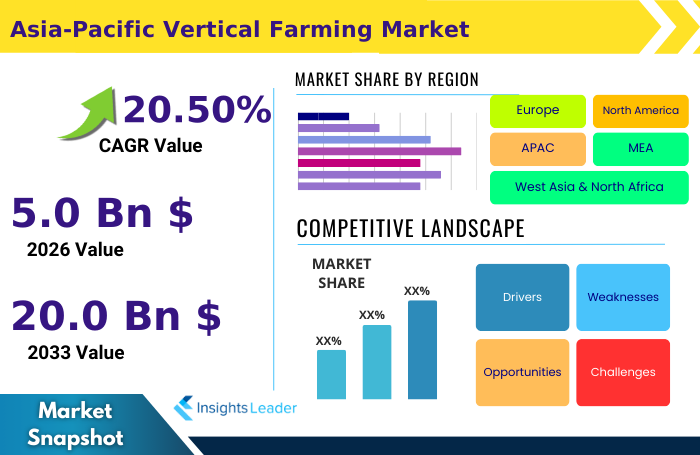
The Asia-Pacific Vertical Farming Market Size in 2026 is estimated to be USD 5.0 Billion
What is the Growth Rate (CAGR) of Asia-Pacific Vertical Farming Market?
The Asia-Pacific Vertical Farming Market is expected to grow at 20.5% CAGR
What is the Market Size of the Asia-Pacific Vertical Farming in 2033?
The Asia-Pacific Vertical Farming Market Size in 2033 is estimated to be USD 20.0 Billion
What are DRO and Impact Forces of Asia-Pacific Vertical Farming Market?
Drivers: Rapid urbanization, reduction in arable land, and high demand for locally sourced, pesticide-free produce are primary market drivers. Restraints: Significant initial capital expenditure and high energy consumption associated with controlled environment agriculture restrict broader adoption. Opportunities: Technological advancements in LED lighting, automation, and government incentives focused on food security present substantial growth opportunities across the Asia-Pacific region.
What is Impact of U.S. Tariffs on Asia-Pacific Vertical Farming Market?
US tariffs primarily impact the global supply chain for key vertical farming components, notably sensors, control systems, and specialized LED technology imported from China or manufactured using tariff-affected raw materials. This can lead to increased Capital Expenditure (CapEx) for vertical farming setups in APAC countries, potentially slowing adoption rates for smaller enterprises due to higher input costs. However, vertical farming’s focus on local food security insulates the final produce market from direct international trade tariffs.
How is AI currently impacting Asia-Pacific Vertical Farming Market?
AI is revolutionizing industries globally by enabling predictive maintenance, optimizing logistics, and personalizing consumer experiences. In manufacturing, AI drives efficiency through robotic process automation and quality control. Within agriculture and vertical farming, it precisely manages resource allocation, optimizes climate controls, and predicts disease outbreaks, leading to significant improvements in yield consistency and reduction in operational costs.