Brazil Naphtha Market Size and Insights – 2026 to 2033
Report ID : IL_6680 | Report Language's : En/Jp/Fr/De | Publisher : IL |
Format : 


What is the Market Size of the Brazil Naphtha in 2026?
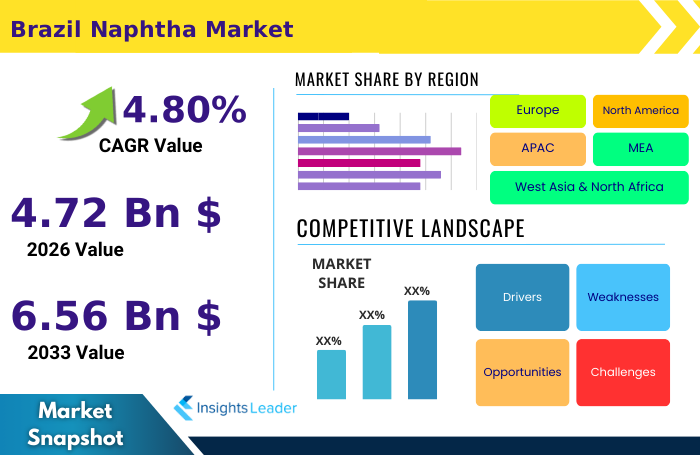
The Brazil Naphtha Market Size in 2026 is estimated to be $4.72 Billion USD
What is the Growth Rate (CAGR) of Brazil Naphtha Market?
The Brazil Naphtha Market is expected to grow at 4.8% CAGR
What is the Market Size of the Brazil Naphtha in 2033?
The Brazil Naphtha Market Size in 2033 is estimated to be $6.56 Billion USD
What are DRO and Impact Forces of Brazil Naphtha Market?
DRO stands for Drivers, Restraints, and Opportunities, the core analytical components determining market trajectory. Key drivers include rising demand from the Brazilian petrochemical sector for olefins production and supportive governmental energy policies. Restraints primarily involve fluctuations in crude oil prices and infrastructure bottlenecks, while environmental regulations present both restraints and opportunities for low-sulfur naphtha.
What is Impact of U.S. Tariffs on Brazil Naphtha Market?
The direct impact of US tariffs on the Brazil Naphtha Market is generally moderate, as the primary trade routes for naphtha are intra-regional or focused on Asian markets. However, tariffs influence global crude and refined product prices, potentially increasing feedstock costs for Brazilian crackers. This creates supply chain uncertainty, prompting local producers to prioritize domestic production stability and seek diversified export markets outside of heavily tariffed zones.
How is AI currently impacting Brazil Naphtha Market?
AI is fundamentally transforming global industries by optimizing supply chain logistics and predicting market volatility with enhanced accuracy. In the naphtha and petrochemical sector, AI is crucial for optimizing refinery processes, minimizing energy consumption, and implementing predictive maintenance to prevent costly downtime. Furthermore, AI tools are used for advanced geological exploration and resource management, increasing operational efficiency across the entire value chain.