Canada Cyber Security Market Size and Insights – 2026 to 2033
Report ID : IL_3192 | Report Language's : En/Jp/Fr/De | Publisher : IL |
Format : 


What is the Market Size of the Canada Cyber Security in 2026?
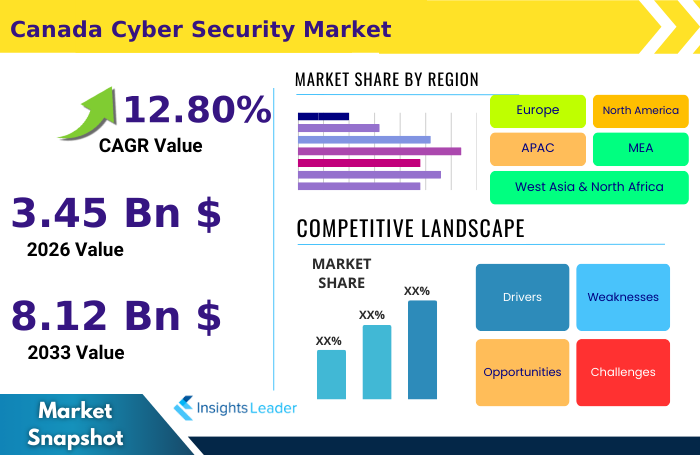
The Canada Cyber Security Market Size in 2026 is estimated to be USD 3.45 Billion
What is the Growth Rate (CAGR) of Canada Cyber Security Market?
The Canada Cyber Security Market is expected to grow at 12.8% CAGR
What is the Market Size of the Canada Cyber Security in 2033?
The Canada Cyber Security Market Size in 2033 is estimated to be USD 8.12 Billion
What are DRO & Impact Forces?
Drivers (D): Increased digital transformation across critical infrastructure sectors (finance, energy, telecommunications); rising frequency and sophistication of state-sponsored cyber threats.Restraints (R): Budgetary constraints for small and medium enterprises (SMEs); shortage of skilled cybersecurity professionals in the Canadian workforce.Opportunities (O): Adoption of advanced technologies like Zero Trust Architecture (ZTA) and Security Orchestration, Automation, and Response (SOAR); robust government initiatives promoting cyber resilience.
What is Impact of US tariffs?
While direct US tariffs on physical cyber security hardware (e.g., servers, networking equipment) can slightly increase import costs for Canadian firms, the primary impact is indirect.Tariffs often disrupt global supply chains, leading to delays and price volatility for specialized hardware components sourced globally and routed through US distributors.This can potentially shift procurement strategies towards cloud-based security solutions (SaaS) or domestic hardware manufacturing, though the software component remains less affected.
How is AI currently impacting industries globally?
AI is fundamentally reshaping operational efficiency, customer service, and data analysis across nearly all global industries. In finance, AI algorithms detect fraudulent transactions instantaneously, while in manufacturing, predictive maintenance drastically reduces downtime. Concurrently, AI fuels sophisticated cyber threats (e.g., deepfakes, adaptive malware), necessitating its counter-deployment in advanced defense systems like threat intelligence platforms and autonomous security operations centers.