Germany Respiratory Humidifying Equipment Market Size and Insights – 2026 to 2033
Report ID : IL_6445 | Report Language's : En/Jp/Fr/De | Publisher : IL |
Format : 


What is the Market Size of the Germany Respiratory Humidifying Equipment in 2026?
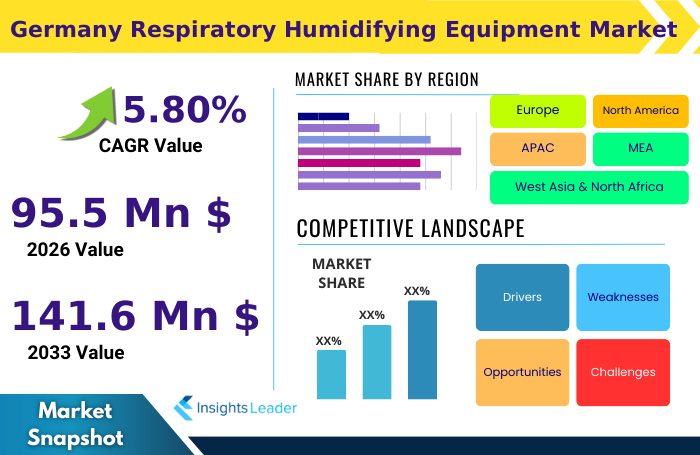
The Germany Respiratory Humidifying Equipment Market Size in 2026 is estimated to be USD 95.5 Million
What is the Growth Rate (CAGR) of Germany Respiratory Humidifying Equipment Market?
The Germany Respiratory Humidifying Equipment Market is expected to grow at 5.8% CAGR
What is the Market Size of the Germany Respiratory Humidifying Equipment in 2033?
The Germany Respiratory Humidifying Equipment Market Size in 2033 is estimated to be USD 141.6 Million
What are DRO and Impact Forces of Germany Respiratory Humidifying Equipment Market?
DRO stands for Drivers, Restraints, and Opportunities, the core analytical components determining market dynamics. Drivers propel growth (e.g., rising prevalence of COPD), Restraints impede it (e.g., high equipment cost), and Opportunities represent untapped potential for expansion (e.g., technological advancements in portable devices). These forces dictate strategic direction for manufacturers and influence investment decisions across the value chain.
What is Impact of U.S. Tariffs on Germany Respiratory Humidifying Equipment Market?
While German manufacturers are not directly subjected to specific US tariffs, the global nature of the medical supply chain means that US tariffs on components imported from Asia can increase the cost of essential sub-assemblies (e.g., sensors, microprocessors). This indirect inflationary pressure affects the final pricing and profitability of respiratory humidifying equipment sold in the German market, potentially causing manufacturers to seek diversified sourcing strategies outside established channels to mitigate rising input costs.
How is AI currently impacting Germany Respiratory Humidifying Equipment Market?
Artificial Intelligence is revolutionizing global industries by enhancing predictive maintenance, optimizing supply chain logistics, and driving personalized patient diagnostics. In manufacturing, AI algorithms predict equipment failure, reducing downtime. In healthcare, it enables precise patient profiling for tailored respiratory treatments and streamlines administrative processes, improving operational efficiency and reducing human error across the system.