Mexico Video Camera Market Size and Insights – 2026 to 2033
Report ID : IL_3091 | Report Language's : En/Jp/Fr/De | Publisher : IL |
Format : 



What is the Market Size of the Mexico Video Camera in 2026?
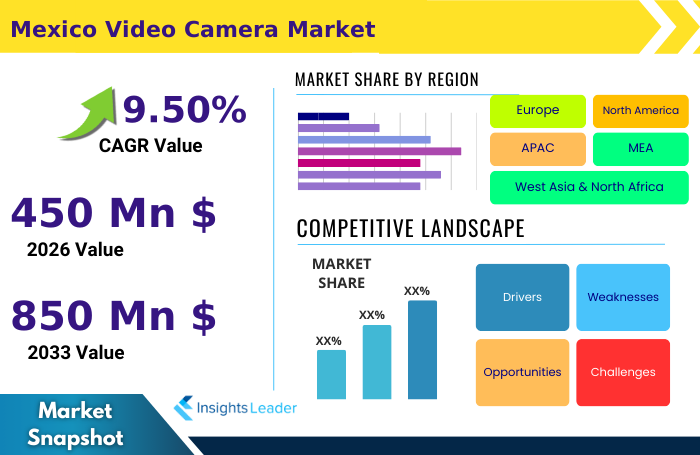
The Mexico Video Camera Market Size in 2026 is estimated to be USD 450 Million
What is the Growth Rate (CAGR) of Mexico Video Camera Market?
The Mexico Video Camera Market is expected to grow at 9.5% CAGR
What is the Market Size of the Mexico Video Camera in 2033?
The Mexico Video Camera Market Size in 2033 is estimated to be USD 850 Million
What are DRO & Impact Forces?
DRO stands for Drivers, Restraints, and Opportunities. Drivers are factors positively influencing market expansion, such as increasing demand for smart city surveillance and residential security solutions in Mexico. Restraints are negative factors, including high implementation costs and economic volatility. Opportunities encompass favorable external conditions like government investment in infrastructure. Impact Forces quantify how these elements collectively shape market trajectory and strategic planning for stakeholders.
What is Impact of US tariffs?
The primary impact of US tariffs on global electronic supply chains often leads to shifts in manufacturing and sourcing strategies, potentially influencing the Mexican market. While Mexico is a major trade partner, tariffs on components sourced from Asian nations can increase the landed cost of sophisticated video camera systems and related networking hardware. Conversely, these tariffs incentivize nearshoring activities, which could benefit Mexico by attracting more localized manufacturing or assembly operations to serve the North American bloc, impacting competition and pricing dynamics within the domestic market.
How is AI currently impacting industries globally?
AI is revolutionizing global industries by enabling unprecedented levels of automation, predictive analysis, and personalization across sectors ranging from healthcare to manufacturing. Specifically in the video camera market, AI powers advanced capabilities such as behavioral analysis, real-time object detection, autonomous threat assessment, and efficient data sorting. This transition shifts video cameras from simple recording tools to intelligent sensors, significantly enhancing operational efficiency and security outcomes across enterprise and governmental deployments worldwide.