Sweden Vertical Farming Market Size and Insights – 2026 to 2033
Report ID : IL_5792 | Report Language's : En/Jp/Fr/De | Publisher : IL |
Format : 


What is the Market Size of the Sweden Vertical Farming in 2026?
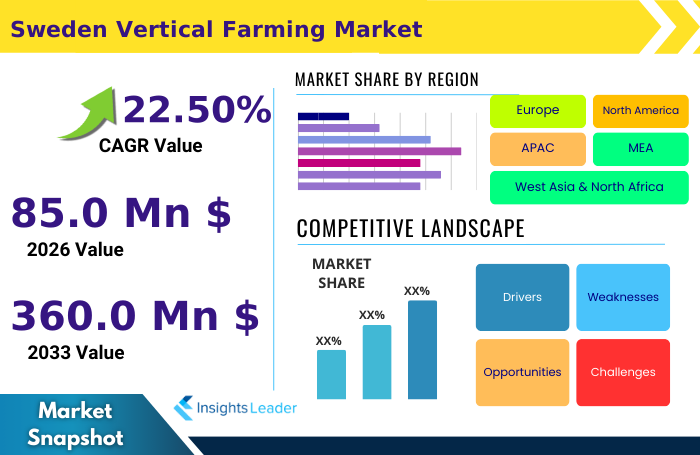
The Sweden Vertical Farming Market Size in 2026 is estimated to be USD 85.0 Million
What is the Growth Rate (CAGR) of Sweden Vertical Farming Market?
The Sweden Vertical Farming Market is expected to grow at 22.5% CAGR
What is the Market Size of the Sweden Vertical Farming in 2033?
The Sweden Vertical Farming Market Size in 2033 is estimated to be USD 360.0 Million
What are DRO and Impact Forces of Sweden Vertical Farming Market?
Drivers include the critical need for localized food production due to Sweden’s short growing season and high consumer demand for sustainably sourced, pesticide-free produce. Restraints center on the substantial upfront capital expenditure required for facility construction and the ongoing operational costs related to electricity consumption for LED lighting. Opportunities arise from technological integration, especially renewable energy sources, and favorable policy support for agricultural innovation in the Nordic region.
What is Impact of U.S. Tariffs on Sweden Vertical Farming Market?
While the primary Swedish vertical farming market remains largely insulated from direct US tariffs, indirect impacts are observed through global supply chains. Tariffs can escalate the cost of crucial technological imports, such as advanced LED lighting systems, sensors, and specialized climate control equipment, often sourced from global markets affected by US trade policies. This indirectly increases the total operational expenditure and hinders rapid scalability for smaller market entrants in Sweden.
How is AI currently impacting Sweden Vertical Farming Market?
Artificial Intelligence is transforming global industries by optimizing resource management, driving automation, and enabling predictive maintenance across complex operations. In vertical farming, AI algorithms manage micro-climates, precisely dosing nutrients, predicting crop yields, and automating harvesting schedules, significantly enhancing efficiency and reducing human error. This technological integration leads to maximized output and minimized resource wastage across multiple industrial sectors, including logistics and manufacturing.