Asia-Pacific Cyber Security Market Size and Insights – 2026 to 2033
Report ID : IL_3232 | Report Language's : En/Jp/Fr/De | Publisher : IL |
Format : 


What is the Market Size of the Asia-Pacific Cyber Security in 2026?
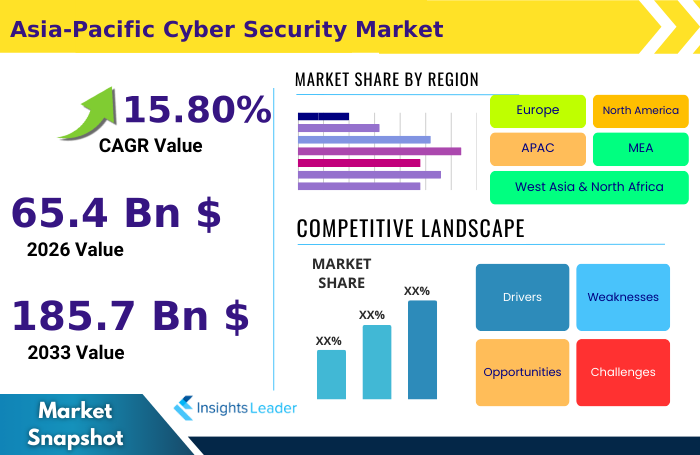
The Asia-Pacific Cyber Security Market Size in 2026 is estimated to be USD 65.4 Billion
What is the Growth Rate (CAGR) of Asia-Pacific Cyber Security Market?
The Asia-Pacific Cyber Security Market is expected to grow at 15.8% CAGR
What is the Market Size of the Asia-Pacific Cyber Security in 2033?
The Asia-Pacific Cyber Security Market Size in 2033 is estimated to be USD 185.7 Billion
What are DRO & Impact Forces?
DRO stands for Drivers, Restraints, and Opportunities, which collectively define the market’s trajectory and profitability. Impact Forces are macroeconomic, political, and technological factors that exert significant external pressure, accelerating or impeding market growth. In cybersecurity, key drivers include rapid digitalization and escalating sophisticated attacks, while restraints often involve budget constraints and lack of skilled labor, particularly across emerging APAC economies.
What is Impact of US tariffs?
The primary impact of US tariffs on the APAC Cyber Security Market is indirect, primarily affecting the pricing and supply chain stability of hardware components and network infrastructure manufactured in or transiting through tariff-affected regions. This can lead to increased capital expenditure for enterprises deploying new security systems. Furthermore, heightened geopolitical tensions associated with tariffs influence regulatory alignment and data sovereignty requirements across the region, complicating cross-border security operations.
How is AI currently impacting industries globally?
Artificial Intelligence is transforming global industries by automating complex processes, enabling predictive analytics, and enhancing operational efficiency across multiple sectors like finance, healthcare, and manufacturing. In cybersecurity, AI is crucial for real-time threat detection, automated response, and behavior anomaly identification, simultaneously empowering defensive capabilities and offering attackers sophisticated tools for large-scale, adaptive cyber offensives. This dual-use nature of AI necessitates continuous updates in global defense strategies.