Japan Stock Photography Market Size and Insights – 2026 to 2033
Report ID : IL_6290 | Report Language's : En/Jp/Fr/De | Publisher : IL |
Format : 


What is the Market Size of the Japan Stock Photography in 2026?
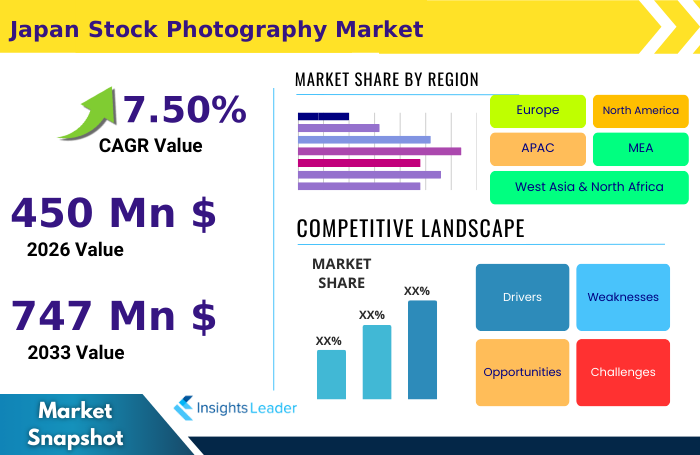
The Japan Stock Photography Market Size in 2026 is estimated to be USD 450 Million
What is the Growth Rate (CAGR) of Japan Stock Photography Market?
The Japan Stock Photography Market is expected to grow at 7.5% CAGR
What is the Market Size of the Japan Stock Photography in 2033?
The Japan Stock Photography Market Size in 2033 is estimated to be USD 747 Million
What are DRO and Impact Forces of Japan Stock Photography Market?
Drivers include the escalating need for high-quality, authentic visual content across digital marketing channels and the rapid expansion of e-commerce platforms requiring extensive product imagery. Restraints involve the increasing sophistication and availability of free or low-cost AI image generators, which challenge traditional licensing models, alongside ongoing copyright complexities in the digital age. Opportunities are present in specialized niche content catering to localized Japanese consumer trends and developing integrated visual subscription services.
What is Impact of U.S. Tariffs on Japan Stock Photography Market?
The impact of US tariffs on the Japan Stock Photography Market is largely indirect. While tariffs primarily affect manufacturing and physical goods, increased trade tensions can dampen global advertising expenditures and affect equipment costs (cameras, storage), potentially leading content creators to tighten production budgets. However, the market, being service-oriented and domestically focused in terms of demand, maintains a high degree of resilience against direct tariff repercussions, focusing instead on internal digital consumption trends.
How is AI currently impacting Japan Stock Photography Market?
AI is fundamentally reshaping operational efficiencies across global industries by automating routine tasks, enhancing predictive analytics, and generating novel forms of content. In content-intensive sectors like stock photography, AI tools are accelerating creative workflows and challenging established intellectual property norms, leading to the rapid democratization of high-quality image generation capabilities. This global technological shift mandates that industries adopt hybrid models integrating human oversight with machine precision to remain competitive.