Mexico Carpooling Market Size and Insights – 2026 to 2033
Report ID : IL_6211 | Report Language's : En/Jp/Fr/De | Publisher : IL |
Format : 


What is the Market Size of the Mexico Carpooling in 2026?
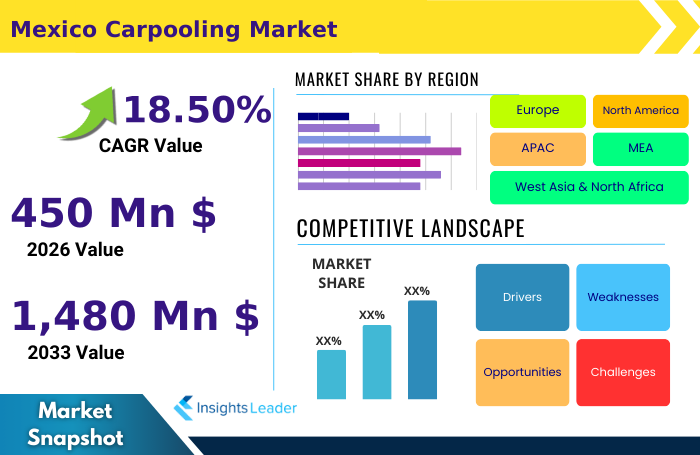
The Mexico Carpooling Market Size in 2026 is estimated to be USD 450 Million
What is the Growth Rate (CAGR) of Mexico Carpooling Market?
The Mexico Carpooling Market is expected to grow at 18.5% CAGR
What is the Market Size of the Mexico Carpooling in 2033?
The Mexico Carpooling Market Size in 2033 is estimated to be USD 1,480 Million
What are DRO and Impact Forces of Mexico Carpooling Market?
The market is driven by escalating traffic congestion in urban hubs like Mexico City and Monterrey, coupled with rising fuel prices pushing consumers toward cost-effective alternatives. Restraints include public trust issues regarding safety and security protocols, and cultural attachment to private vehicle ownership. Opportunities lie in integrating carpooling solutions with existing corporate employee benefit programs and enhancing technology platforms for better route optimization.
What is Impact of U.S. Tariffs on Mexico Carpooling Market?
While carpooling primarily remains a localized service, the impact of US tariffs on Mexico’s automotive manufacturing sector is tangential but significant. Tariffs can increase the cost of imported vehicle components and new fleet acquisitions, potentially leading to higher operational expenses for platform providers utilizing dedicated vehicles. This cost increase might be indirectly passed to consumers or slow down regional expansion plans requiring capital expenditure on vehicles.
How is AI currently impacting Mexico Carpooling Market?
Artificial Intelligence (AI) is fundamentally transforming global industries through enhanced predictive modeling, comprehensive supply chain optimization, and automated customer experience management systems. In the context of mobility and logistics, AI is critical for dynamic pricing strategies, accurate real-time demand forecasting, and highly efficient route matching algorithms, generating substantial efficiency gains and fostering personalized service delivery across the board.