Singapore Respiratory Humidifying Equipment Market Size and Insights – 2026 to 2033
Report ID : IL_5965 | Report Language's : En/Jp/Fr/De | Publisher : IL |
Format : 


What is the Market Size of the Singapore Respiratory Humidifying Equipment in 2026?
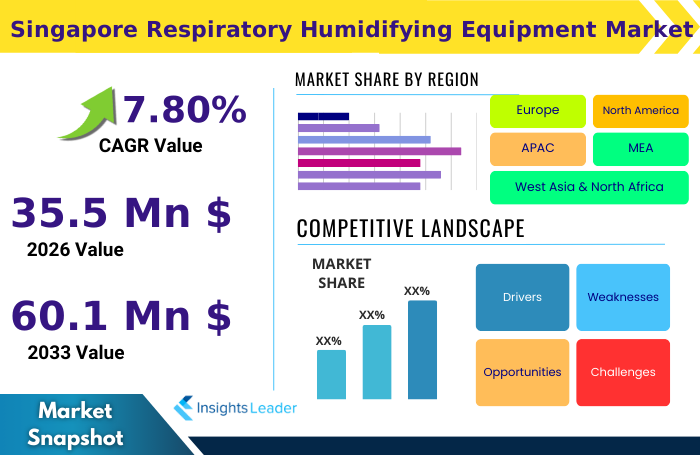
The Singapore Respiratory Humidifying Equipment Market Size in 2026 is estimated to be USD 35.5 Million
What is the Growth Rate (CAGR) of Singapore Respiratory Humidifying Equipment Market?
The Singapore Respiratory Humidifying Equipment Market is expected to grow at CAGR 7.8%
What is the Market Size of the Singapore Respiratory Humidifying Equipment in 2033?
The Singapore Respiratory Humidifying Equipment Market Size in 2033 is estimated to be USD 60.1 Million
What are DRO and Impact Forces of Singapore Respiratory Humidifying Equipment Market?
DRO stands for Demand, Risks, and Opportunities, which form the core framework for strategic market assessment in research reports. Demand quantifies the existing consumer need, Risks analyze potential threats (regulatory or competitive), and Opportunities identify future growth pathways. Impact Forces are external macroeconomic, technological, or political elements, such as pandemics or major policy shifts, that significantly influence the overall market trajectory and competitive landscape.
What is Impact of U.S. Tariffs on Singapore Respiratory Humidifying Equipment Market?
US tariffs primarily introduce volatility and complexity into global medical device supply chains by increasing the transactional costs of components and finished goods imported from targeted nations. For the Singapore respiratory equipment market, this impact is generally felt through higher procurement prices for components originating from specific Asian manufacturing hubs, necessitating greater efforts toward supply chain diversification and vendor management to mitigate rising operational expenses.
How is AI currently impacting Singapore Respiratory Humidifying Equipment Market?
AI is fundamentally reshaping global industries by enabling advanced automation, enhancing predictive maintenance capabilities, and providing deeper analytical insights than previously achievable. In healthcare, this translates to faster diagnostics, personalized treatment protocols, and accelerated R&D timelines, leading to significant increases in operational efficiency and shifts toward highly sophisticated, data-driven business models across all major sectors.