Sweden Graphic Processor Market Size and Insights – 2026 to 2033
Report ID : IL_5780 | Report Language's : En/Jp/Fr/De | Publisher : IL |
Format : 



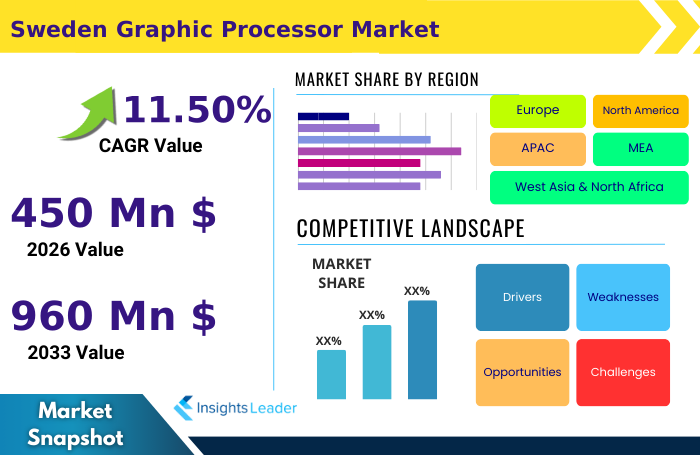
What is the Market Size of the Sweden Graphic Processor in 2026?
The Sweden Graphic Processor Market Size in 2026 is estimated to be USD 450 Million
What is the Growth Rate (CAGR) of Sweden Graphic Processor Market?
The Sweden Graphic Processor Market is expected to grow at 11.5% CAGR
What is the Market Size of the Sweden Graphic Processor in 2033?
The Sweden Graphic Processor Market Size in 2033 is estimated to be USD 960 Million
What are DRO and Impact Forces of Sweden Graphic Processor Market?
Drivers, Restraints, and Opportunities (DRO) constitute the core analytical framework determining market trajectory. Drivers include the rising proliferation of high-end gaming and rapid adoption of artificial intelligence in Swedish data centers, demanding specialized graphic processing units (GPUs). Impact forces are external macro-environmental elements, such as technological shifts, regulatory changes (e.g., EU Digital Markets Act), and competitive intensity, which fundamentally shape market dynamics and long-term viability.
What is Impact of U.S. Tariffs on Sweden Graphic Processor Market?
The implementation of US tariffs, particularly those targeting electronic components and finished goods manufactured in specific regions, introduces significant volatility and cost inflation into the Swedish GPU supply chain. Since many leading GPU manufacturers rely on global supply chains influenced by US trade policy, tariffs lead to elevated acquisition costs for Swedish enterprises and consumers, potentially slowing the upgrade cycle for professional workstations and consumer electronics, although direct EU-US trade agreements mitigate some direct effects.
How is AI currently impacting Sweden Graphic Processor Market?
Artificial Intelligence is globally transforming industries by necessitating unparalleled computational power for model training and inference, dramatically boosting demand for high-performance GPUs. This impact is most pronounced in healthcare (diagnostic imaging), finance (algorithmic trading), and autonomous vehicle development, driving an unprecedented capital expenditure into advanced cloud infrastructure and specialized AI hardware across all major economies.