Belgium Naphtha Market Size and Insights – 2026 to 2033
Report ID : IL_6720 | Report Language's : En/Jp/Fr/De | Publisher : IL |
Format : 


What is the Market Size of the Belgium Naphtha in 2026?
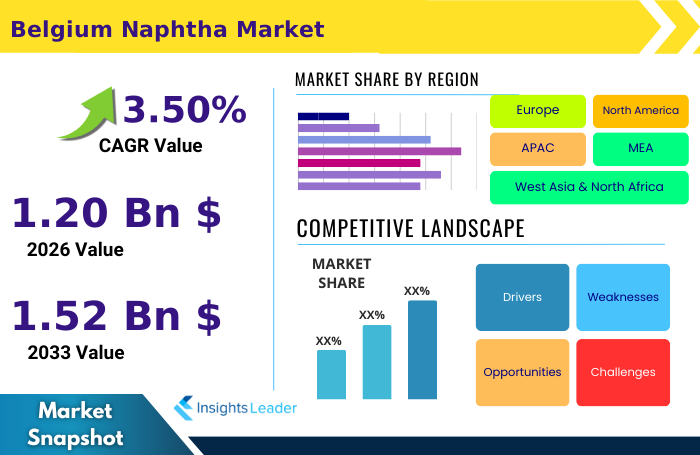
The Belgium Naphtha Market Size in 2026 is estimated to be USD 1.20 Billion
What is the Growth Rate (CAGR) of Belgium Naphtha Market?
The Belgium Naphtha Market is expected to grow at 3.5% CAGR
What is the Market Size of the Belgium Naphtha in 2033?
The Belgium Naphtha Market Size in 2033 is estimated to be USD 1.52 Billion
What are DRO and Impact Forces of Belgium Naphtha Market?
Drivers: Robust demand from the Belgian petrochemical sector, particularly for ethylene and propylene production, supported by existing cracking infrastructure.Restraints: Increasing global focus on decarbonization and stricter environmental regulations concerning fossil fuel derivatives and refinery emissions.Opportunities: Integration of sustainable feedstock alternatives and optimization of existing processes through advanced catalytic technology to enhance operational efficiency.
What is Impact of U.S. Tariffs on Belgium Naphtha Market?
US tariffs primarily impact global trade flows by shifting sourcing priorities and creating cost disparities for refined products and petrochemical outputs.While naphtha itself may not be directly targeted, subsequent retaliatory measures and trade friction increase volatility in global crude and refined product pricing, indirectly affecting Belgian import costs.The resulting trade instability can lead European manufacturers to seek more localized or diversified supply chains, occasionally favoring Middle Eastern or North Sea suppliers over US-linked sources.
How is AI currently impacting Belgium Naphtha Market?
Artificial intelligence is transforming heavy industries by enabling highly precise predictive maintenance schedules for critical refinery and cracker equipment, significantly reducing unplanned downtime and operational costs. AI algorithms also optimize complex supply chain logistics, including inventory management and real-time vessel tracking, ensuring highly efficient feedstock procurement and distribution globally. Furthermore, AI is increasingly used for advanced demand forecasting and identifying optimal blending recipes in refining processes to maximize high-value output.