Germany Carbon Credits Market Size and Insights – 2026 to 2033
Report ID : IL_6426 | Report Language's : En/Jp/Fr/De | Publisher : IL |
Format : 


What is the Market Size of the Germany Carbon Credits in 2026?
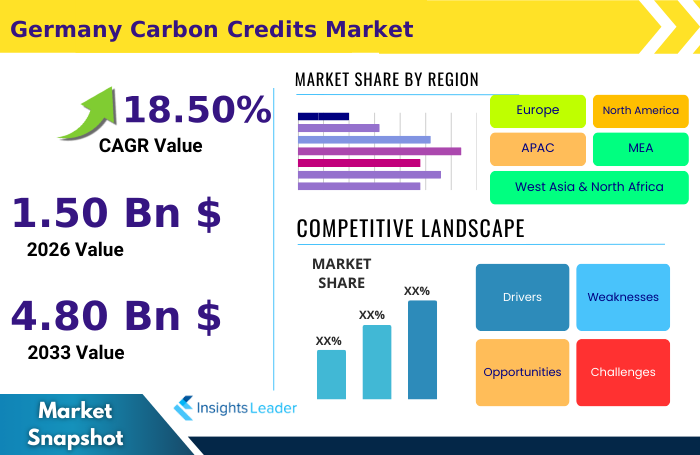
The Germany Carbon Credits Market Size in 2026 is estimated to be USD 1.50 Billion
What is the Growth Rate (CAGR) of Germany Carbon Credits Market?
The Germany Carbon Credits Market is expected to grow at 18.5% CAGR
What is the Market Size of the Germany Carbon Credits in 2033?
The Germany Carbon Credits Market Size in 2033 is estimated to be USD 4.80 Billion
What are DRO and Impact Forces of Germany Carbon Credits Market?
Drivers include stringent EU Emissions Trading System (EU ETS) regulations and strong national commitments towards decarbonization by major German industrial entities. Restraints revolve around high price volatility in the EU Allowance (EUA) market and the increasing complexity of international credit verification standards. Opportunities are driven by the development of domestic carbon removal technologies and the integration of carbon pricing into broader fiscal policy instruments.
What is Impact of U.S. Tariffs on Germany Carbon Credits Market?
While US tariffs directly target trade goods, their impact on the German carbon market is indirect, primarily affecting the cost competitiveness of major exporting industries (like steel and chemicals) already subject to EU ETS costs. Increased trade friction potentially reduces industrial output, which could temporarily decrease demand for compliance credits, though long-term regulatory pressure remains the dominant pricing factor.
How is AI currently impacting Germany Carbon Credits Market?
Artificial intelligence is fundamentally transforming global industries by optimizing supply chains, enhancing predictive maintenance in manufacturing, and enabling sophisticated analysis of consumer behavior. In the context of environmental markets, AI facilitates precise Monitoring, Reporting, and Verification (MRV) of carbon projects and improves the liquidity and efficiency of trading platforms through algorithmic execution and fraud detection.