Germany PVC Compound Market Size and Insights – 2026 to 2033
Report ID : IL_6439 | Report Language's : En/Jp/Fr/De | Publisher : IL |
Format : 


What is the Market Size of the Germany PVC Compound in 2026?
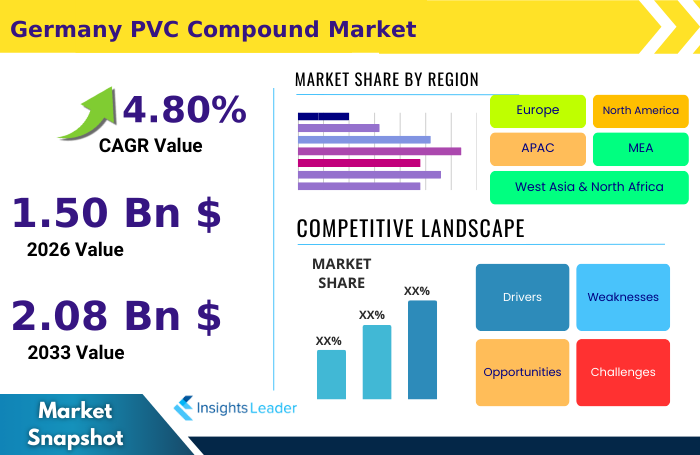
The Germany PVC Compound Market Size in 2026 is estimated to be USD 1.50 Billion
What is the Growth Rate (CAGR) of Germany PVC Compound Market?
The Germany PVC Compound Market is expected to grow at 4.8% CAGR
What is the Market Size of the Germany PVC Compound in 2033?
The Germany PVC Compound Market Size in 2033 is estimated to be USD 2.08 Billion
What are DRO and Impact Forces of Germany PVC Compound Market?
DRO (Drivers, Restraints, Opportunities) and Impact Forces represent internal and external factors fundamentally shaping the market trajectory. Drivers include rising demand from construction and automotive sectors; Restraints often involve stringent environmental regulations concerning plasticizers; Opportunities arise from advancements in bio-based and sustainable PVC formulations; Impact Forces cover macroeconomic events like inflation or supply chain disruptions.
What is Impact of U.S. Tariffs on Germany PVC Compound Market?
The primary impact of US tariffs on the global PVC compound market involves increased volatility in raw material pricing, particularly ethylene and chlorine derivatives, which affects European manufacturers’ margins. Additionally, tariffs indirectly pressure global supply chains, leading German compounders to source domestically or from unaffected regions, potentially increasing logistics costs and shifting trade balances within key end-use sectors like durable goods manufacturing.
How is AI currently impacting Germany PVC Compound Market?
Artificial Intelligence is transforming global industries by optimizing complex supply chain logistics, enabling predictive maintenance in manufacturing facilities to reduce downtime, and accelerating the research and development process for novel compound formulations. Furthermore, AI tools are increasingly used in demand forecasting and inventory management, leading to significant efficiency gains and cost reductions across the chemical production sector.