Middle East & Africa Hydro Turbine Market Size and Insights – 2026 to 2033
Report ID : IL_12778 | Report Language's : En/Jp/Fr/De | Publisher : IL |
Format : 


What is the Market Size of the Middle East & Africa Hydro Turbine in 2026?
The Middle East & Africa Hydro Turbine Market Size in 2026 is estimated to be USD 450.0 Million
What is the Growth Rate (CAGR) of Middle East & Africa Hydro Turbine Market?
The Middle East & Africa Hydro Turbine Market is expected to grow at 6.8% CAGR
What is the Market Size of the Middle East & Africa Hydro Turbine in 2033?
The Middle East & Africa Hydro Turbine Market Size in 2033 is estimated to be USD 715.4 Million

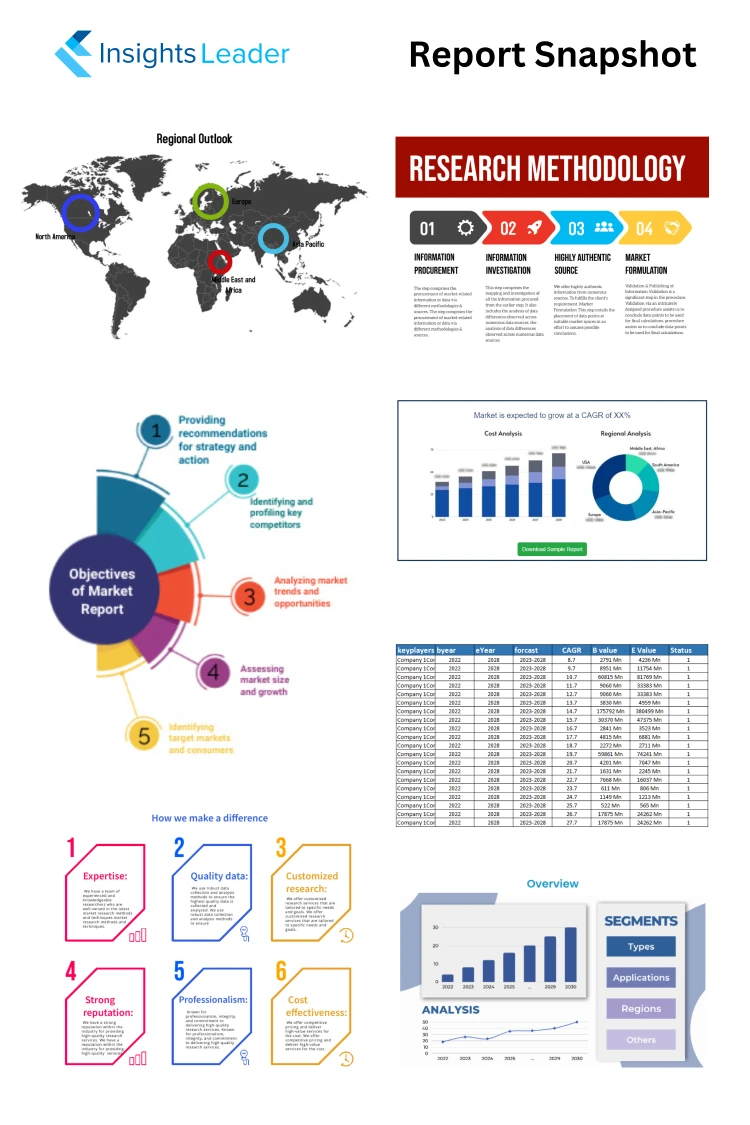
Report Snapshot
| Report Attributes | Report Details |
|---|---|
| Forecast Year | 2033 |
| CAGR | 6.8% |
| History Year | 2016-2024 |
| Market Size in 2026 | 450.0 Million USD |
| Market Size in 2033 | 715.4 Million USD |
What are DRO & Impact Forces of Middle East & Africa Hydro Turbine Market?
DRO stands for Driving, Restraining, and Opportunity factors, serving as a comprehensive framework to analyze internal and external forces shaping market expansion or contraction. Driving forces accelerate growth (e.g., government incentives), restraints impede it (e.g., high capital costs), and opportunities highlight potential future avenues. Impact Forces, conversely, represent sudden, high-magnitude external events such as global policy shifts, severe geopolitical instability, or black swan events (e.g., pandemics or major infrastructure failures) that drastically and often unpredictably alter market projections, requiring immediate strategic reassessment by stakeholders.
What is Impact of US Tariffs on Middle East & Africa Hydro Turbine Market?
While the Middle East & Africa region typically relies heavily on hydro turbine imports from Asian and European manufacturers, the persistent application of US tariffs, particularly on specialized raw materials like advanced steel alloys and complex electrical components, generates significant upstream cost volatility. This inflationary pressure is ultimately passed down the global supply chain, increasing the landed cost of turbine imports for MEA project developers, thus potentially delaying or increasing the budget requirements for new hydroelectric projects across the region.
How is AI currently impacting Middle East & Africa Hydro Turbine Market?
Artificial Intelligence (AI) is transforming global industrial sectors by enabling unprecedented levels of operational efficiency and predictive capability. Specifically, AI-driven solutions are utilized for sophisticated demand forecasting, optimized logistics, and rigorous quality control in manufacturing processes. In heavy infrastructure, such as the hydro turbine sector, AI implementation focuses heavily on predictive maintenance algorithms, using sensor data to anticipate mechanical failure, minimize downtime, and maximize energy generation efficiency, thereby lowering lifetime operational costs.
Middle East & Africa Hydro Turbine Market Research Report – Table of Contents
1. Executive Summary
2. Introduction & Research Objectives
3. Scope of the Study
4. Research Methodology of Middle East & Africa Hydro Turbine Market
5. Middle East & Africa Hydro Turbine Market Overview & Industry Background
6. Middle East & Africa Hydro Turbine Market Size & Forecast Analysis
7. Middle East & Africa Hydro Turbine Market Segmentation Analysis
8. Competitive Landscape
9. Consumer Behavior & Demand Analysis
10. Pricing & Cost Structure Analysis
11. Middle East & Africa Hydro Turbine Market Drivers, Challenges & Risks
12. Regulatory & Policy Framework
13. Technology & Innovation Impact
14. Strategic Insights & Recommendations
15. Conclusion & Future Outlook
For more queries, kindly contact [email protected]