South Korea Stock Photography Market Size and Insights – 2026 to 2033
Report ID : IL_5850 | Report Language's : En/Jp/Fr/De | Publisher : IL |
Format : 


What is the Market Size of the South Korea Stock Photography in 2026?
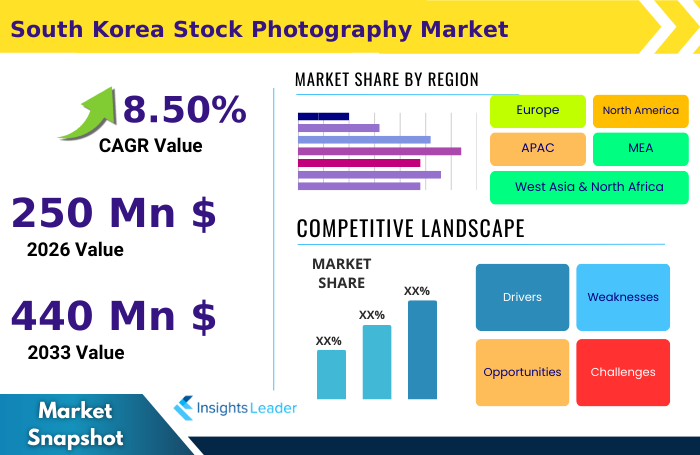
The South Korea Stock Photography Market Size in 2026 is estimated to be USD 250 Million
What is the Growth Rate (CAGR) of South Korea Stock Photography Market?
The South Korea Stock Photography Market is expected to grow at 8.5% CAGR
What is the Market Size of the South Korea Stock Photography in 2033?
The South Korea Stock Photography Market Size in 2033 is estimated to be USD 440 Million
What are DRO and Impact Forces of South Korea Stock Photography Market?
Drivers (D): Exponential growth in digital advertising, social media marketing, and content creation platforms across South Korea, necessitating constant demand for fresh visual assets.Restraints (R): Increasing prevalence of sophisticated AI-generated imagery and challenges related to image copyright infringement and licensing complexities in a highly digitized environment.Opportunities (O): Expansion into specialized niche content (e.g., local cultural context, K-Pop/Hallyu focus) and integration of subscription models tailored for small and medium enterprises (SMEs).
What is Impact of U.S. Tariffs on South Korea Stock Photography Market?
While direct tariffs on digital goods are minimal, prolonged US trade policies introduce macroeconomic instability, potentially constraining advertising budgets for global corporations operating in or targeting the South Korean market.Indirect impacts include heightened production costs for hardware used in high-quality visual content creation and potential reductions in foreign direct investment (FDI) aimed at the digital creative sector.The resulting cautious spending environment encourages South Korean agencies to prioritize cost-effective stock photography solutions over custom shoots, subtly boosting market demand volumes.
How is AI currently impacting South Korea Stock Photography Market?
AI is fundamentally disrupting creative industries by automating repetitive tasks, accelerating the production pipeline, and generating hyper-realistic visual and textual content at unprecedented scale and speed. This leads to efficiency gains in marketing and product design. The ethical implications regarding intellectual property, data sourcing, and potential displacement of traditional creative roles are simultaneously driving regulatory scrutiny and organizational restructuring globally.