Sweden Stock Photography Market Size and Insights – 2026 to 2033
Report ID : IL_5770 | Report Language's : En/Jp/Fr/De | Publisher : IL |
Format : 


What is the Market Size of the Sweden Stock Photography in 2026?
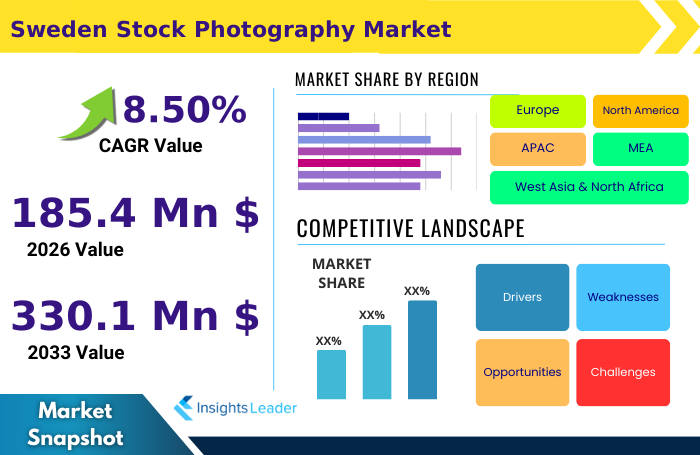
The Sweden Stock Photography Market Size in 2026 is estimated to be $185.4 Million
What is the Growth Rate (CAGR) of Sweden Stock Photography Market?
The Sweden Stock Photography Market is expected to grow at 8.5% CAGR
What is the Market Size of the Sweden Stock Photography in 2033?
The Sweden Stock Photography Market Size in 2033 is estimated to be $330.1 Million
What are DRO and Impact Forces of Sweden Stock Photography Market?
Drivers include the exponential growth in digital marketing, social media content consumption, and the expanding demand for localized, authentic visual assets unique to the Scandinavian culture. Restraints center on intense competition from high-quality, low-cost microstock platforms and the operational complexity introduced by evolving EU copyright regulations. Opportunities lie in catering to niche segments such as 3D rendering and specialized video stock footage.
What is Impact of U.S. Tariffs on Sweden Stock Photography Market?
While Sweden is not directly subjected to US tariffs, the global nature of major stock photography platforms means that tariffs indirectly affect the operational expenditures and cross-border investment strategies of key industry players. This can lead to minor fluctuations in subscription costs or licensing fee structures for end-users, although the primary impact on the Swedish market remains localized regulatory compliance and domestic digital adoption rates.
How is AI currently impacting Sweden Stock Photography Market?
AI is fundamentally reshaping the content creation landscape by enabling hyper-realistic image generation, thereby challenging the economic models of traditional stock photography contributors and platforms worldwide. Industries are leveraging AI for accelerated creative workflows, personalization, and automated content tagging, forcing legacy providers to pivot toward curated, ethically sourced, and authenticated visual assets to maintain market differentiation and intellectual property integrity.