France Naphtha Market Size and Insights – 2026 to 2033
Report ID : IL_6480 | Report Language's : En/Jp/Fr/De | Publisher : IL |
Format : 


What is the Market Size of the France Naphtha in 2026?
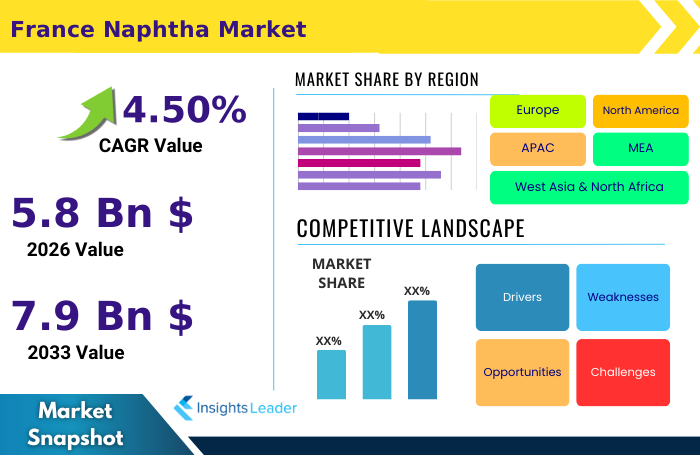
The France Naphtha Market Size in 2026 is estimated to be USD 5.8 Billion
What is the Growth Rate (CAGR) of France Naphtha Market?
The France Naphtha Market is expected to grow at CAGR 4.5%
What is the Market Size of the France Naphtha in 2033?
The France Naphtha Market Size in 2033 is estimated to be USD 7.9 Billion
What are DRO and Impact Forces of France Naphtha Market?
Drivers include robust demand from the European petrochemical industry, particularly for ethylene and propylene production, supported by existing steam cracking infrastructure in France. Restraints involve increasing regulatory pressure favoring bio-based alternatives and volatility in crude oil prices, which directly impacts naphtha feedstock costs and profitability. Opportunities lie in maximizing integration with renewable hydrogen projects and adapting refinery operations for flexible feedstock utilization.
What is Impact of U.S. Tariffs on France Naphtha Market?
While direct US tariffs on French naphtha exports are infrequent, broader global trade disputes involving the US and major oil producers introduce significant volatility in international pricing and supply logistics. These tariffs indirectly impact the European market by shifting global trading routes for crude derivatives and causing unpredictable fluctuations in the cost differential between naphtha and alternative feedstocks like LPG, thereby challenging long-term procurement strategies for French petrochemical players.
How is AI currently impacting France Naphtha Market?
AI is revolutionizing global industrial operations by enabling highly advanced predictive maintenance, thereby reducing unplanned downtime in refineries and chemical plants. Furthermore, machine learning algorithms are optimizing supply chain management, allowing for better forecasting of naphtha demand and inventory levels based on real-time economic indicators and climate data. This leads to substantial operational efficiency gains and minimizes waste across the hydrocarbon value chain.