Argentina Sleep Apnea Devices Market Size and Insights – 2026 to 2033
Report ID : IL_6812 | Report Language's : En/Jp/Fr/De | Publisher : IL |
Format : 


What is the Market Size of the Argentina Sleep Apnea Devices in 2026?
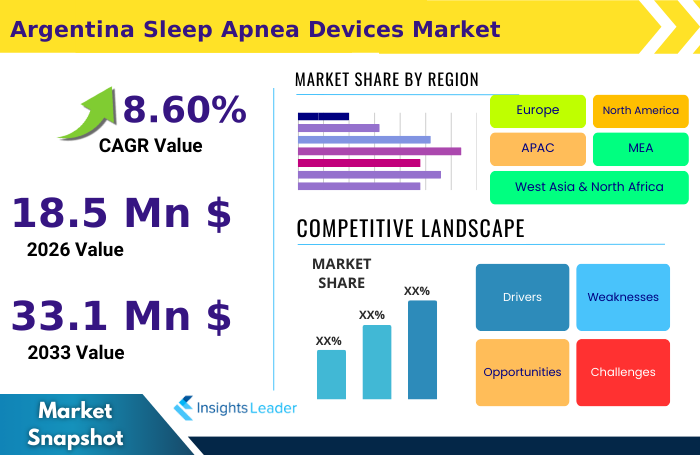
The Argentina Sleep Apnea Devices Market Size in 2026 is estimated to be USD 18.5 Million
What is the Growth Rate (CAGR) of Argentina Sleep Apnea Devices Market?
The Argentina Sleep Apnea Devices Market is expected to grow at 8.6% CAGR
What is the Market Size of the Argentina Sleep Apnea Devices in 2033?
The Argentina Sleep Apnea Devices Market Size in 2033 is estimated to be USD 33.1 Million
What are DRO and Impact Forces of Argentina Sleep Apnea Devices Market?
DRO stands for Drivers, Restraints, and Opportunities, which form the foundational analytical framework of market research. Drivers are factors pushing growth (e.g., increasing prevalence of sleep disorders), while Restraints impede market expansion (e.g., high device costs, limited reimbursement). Opportunities denote areas for future innovation and market penetration. Impact Forces refer to significant external, macro-environmental factors, such as economic crises or regulatory changes, that exert a strong, sudden influence on market dynamics and strategic planning.
What is Impact of U.S. Tariffs on Argentina Sleep Apnea Devices Market?
The primary impact of US tariffs on the global Sleep Apnea Devices market is felt through disruptions in the supply chain for critical electronic components and raw materials, especially those sourced from Asia. While Argentina may not be directly affected by bilateral US tariffs, the increased cost of manufacturing components globally leads to higher landed costs for finished CPAP and diagnostic devices. This inflationary pressure can subsequently restrict access and affordability within emerging markets like Argentina, particularly where local production capacity is limited.
How is AI currently impacting Argentina Sleep Apnea Devices Market?
AI is fundamentally transforming global industries through enhanced predictive analytics and automation across multiple value chains. In healthcare, AI is crucial for rapid and accurate diagnosis (e.g., automated interpretation of polysomnography data), optimizing treatment efficacy through personalized device settings, and streamlining administrative tasks. Furthermore, AI enhances operational efficiency in logistics, manufacturing quality control, and customer experience through advanced chatbots and predictive maintenance scheduling.