Indonesia Biofuel Market Size and Insights – 2026 to 2033
Report ID : IL_16583 | Report Language's : En/Jp/Fr/De | Publisher : IL |
Format : 


What is the Market Size of the Indonesia Biofuel in 2026?
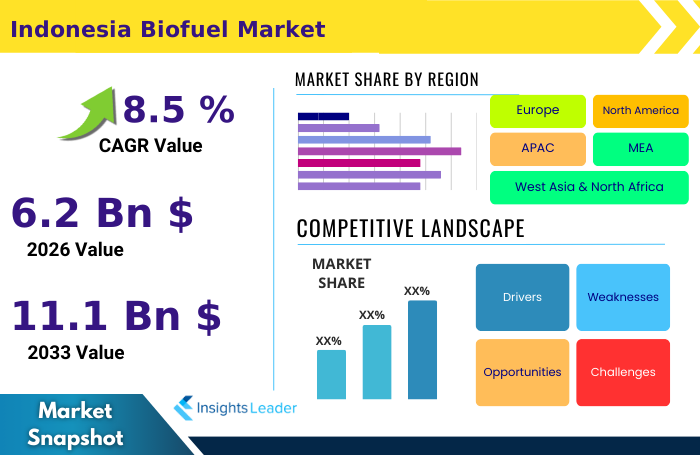
The Indonesia Biofuel Market Size in 2026 is estimated to be USD 6.2 Billion
What is the Growth Rate (CAGR) of Indonesia Biofuel Market?
The Indonesia Biofuel Market is expected to grow at 8.5% CAGR
What is the Market Size of the Indonesia Biofuel in 2033?
The Indonesia Biofuel Market Size in 2033 is estimated to be USD 11.1 Billion
Report Snapshot
| Report Attributes | Report Details |
|---|---|
| Forecast Year | 2033 |
| CAGR | 8.5% |
| History Year | 2016-2024 |
| Market Size in 2026 | 6.2 Billion USD$ |
| Market Size in 2033 | 11.1 Billion USD$ |
What are DRO & Impact Forces of Indonesia Biofuel Market?
Drivers include the mandatory domestic blending program (B35/B40) and strong government support aimed at reducing fossil fuel dependency. Risks involve high volatility in crude palm oil (CPO) prices and ongoing international regulatory pressures regarding sustainability and deforestation practices. Opportunities center around the development of Sustainable Aviation Fuel (SAF) and expansion into oleochemical derivatives. Impact forces include global energy transition policies and Indonesia’s strategic goal of enhancing national energy security through local resources.
What is Impact of US Tariffs on Indonesia Biofuel Market?
While direct biofuel exports from Indonesia to the U.S. are generally minimal, U.S. tariffs on palm oil and derivative products indirectly influence global CPO pricing and market dynamics. These tariffs, often related to alleged subsidies or sustainability concerns, push Indonesia to stabilize market revenues by prioritizing domestic consumption mandates and diversifying trade partnerships away from traditional Western markets toward Asia. This necessitates increased internal infrastructure investment to absorb higher production volumes.
How is AI currently impacting Indonesia Biofuel Market?
Artificial Intelligence (AI) is transforming feedstock procurement by optimizing supply chain logistics and improving yield predictions for palm oil cultivation. AI systems are also implemented in biofuel refineries to control and optimize reactor conditions and blending processes, ensuring maximum efficiency, quality assurance, and reduced operational downtime. This technological integration is key to handling the complexities of high-volume blending mandates like B35 effectively.
Indonesia Biofuel Market Research Report – Table of Contents
1. Executive Summary
2. Introduction & Research Objectives
3. Scope of the Study
4. Research Methodology of Indonesia Biofuel Market
5. Indonesia Biofuel Market Overview & Industry Background
6. Indonesia Biofuel Market Size & Forecast Analysis
7. Indonesia Biofuel Market Segmentation Analysis
8. Competitive Landscape
9. Consumer Behavior & Demand Analysis
10. Pricing & Cost Structure Analysis
11. Indonesia Biofuel Market Drivers, Challenges & Risks
12. Regulatory & Policy Framework
13. Technology & Innovation Impact
14. Strategic Insights & Recommendations
15. Conclusion & Future Outlook
For more queries, kindly contact [email protected]