Poland Smart Manufacturing Market Size and Insights – 2026 to 2033
Report ID : IL_6042 | Report Language's : En/Jp/Fr/De | Publisher : IL |
Format : 


What is the Market Size of the Poland Smart Manufacturing in 2026?
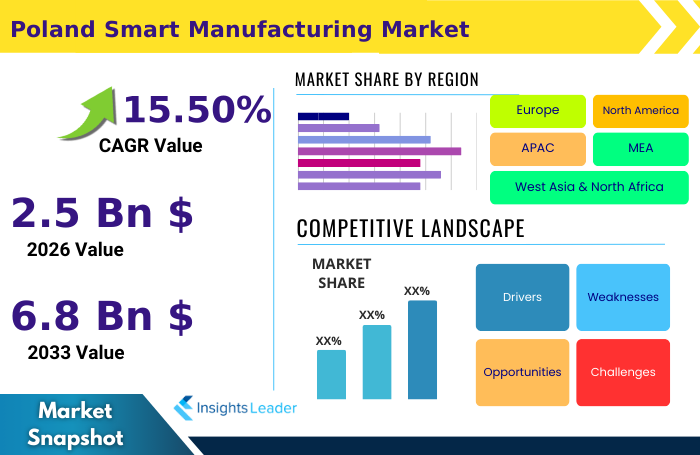
The Poland Smart Manufacturing Market Size in 2026 is estimated to be $2.5 Billion
What is the Growth Rate (CAGR) of Poland Smart Manufacturing Market?
The Poland Smart Manufacturing Market is expected to grow at CAGR 15.5%
What is the Market Size of the Poland Smart Manufacturing in 2033?
The Poland Smart Manufacturing Market Size in 2033 is estimated to be $6.8 Billion
What are DRO and Impact Forces of Poland Smart Manufacturing Market?
The primary forces driving the Polish market include strong governmental support for Industry 4.0 initiatives, consistent availability of skilled engineering labor, and robust integration into the European value chain. Restraints include the high initial investment costs that often challenge Small and Medium-sized Enterprises (SMEs) and persistent cybersecurity vulnerabilities across networked systems. Opportunities lie significantly in expanding specialized robotics and advanced AI integration, particularly across the highly productive automotive and electronics sectors.
What is Impact of U.S. Tariffs on Poland Smart Manufacturing Market?
The impact of US tariffs on the Polish smart manufacturing sector is generally indirect, primarily stemming from cascading effects across global supply chain adjustments, notably in high-value electronics and automotive components flowing through the European Union. While Poland is not directly targeted, increased production costs for raw materials sourced globally and shifts in consumer demand patterns affect export competitiveness. This global friction potentially accelerates reshoring and localization initiatives within the broader EU manufacturing framework, benefiting highly automated facilities in Poland.
How is AI currently impacting Poland Smart Manufacturing Market?
AI is fundamentally transforming operational efficiency across all industrial verticals by enabling sophisticated predictive maintenance, optimizing complex supply chain logistics through enhanced demand forecasting, and automating rigorous quality control processes in real-time. Globally, AI integration significantly reduces operational expenditure (OpEx), accelerates product time-to-market, and facilitates highly customized mass production, thereby establishing new global benchmarks for industrial productivity, resource efficiency, and systemic resilience.