Sweden Sleep Apnea Devices Market Size and Insights – 2026 to 2033
Report ID : IL_5772 | Report Language's : En/Jp/Fr/De | Publisher : IL |
Format : 


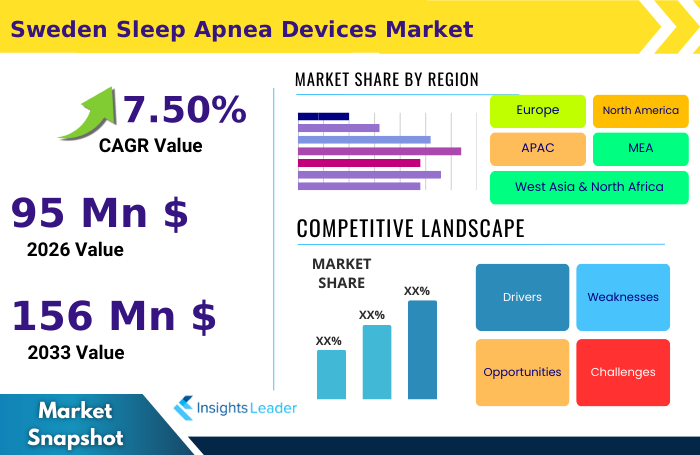
What is the Market Size of the Sweden Sleep Apnea Devices in 2026?
The Sweden Sleep Apnea Devices Market Size in 2026 is estimated to be USD 95 Million
What is the Growth Rate (CAGR) of Sweden Sleep Apnea Devices Market?
The Sweden Sleep Apnea Devices Market is expected to grow at 7.5% CAGR
What is the Market Size of the Sweden Sleep Apnea Devices in 2033?
The Sweden Sleep Apnea Devices Market Size in 2033 is estimated to be USD 156 Million
What are DRO and Impact Forces of Sweden Sleep Apnea Devices Market?
Drivers, Restraints, and Opportunities (DRO) are the core analytical components used to determine future market trajectory, identifying factors that accelerate or impede growth.Impact Forces refer to significant external pressures such as regulatory changes, pandemics, or macroeconomic shifts that have a measurable and often sudden effect on established market dynamics.Understanding the interplay of DRO and Impact Forces is critical for accurate forecasting and strategic planning across the sleep apnea device industry.
What is Impact of U.S. Tariffs on Sweden Sleep Apnea Devices Market?
The primary impact of US tariffs is felt across global supply chains, leading to increased costs for specific electronic components and raw materials essential for manufacturing sleep apnea devices.While Sweden is not directly subjected to these tariffs, manufacturers often source components internationally, meaning increased component costs translate to higher manufacturing overhead and potentially elevated final device pricing globally.This external trade friction can constrain investment in research and development for new device technologies by global market leaders operating within the Swedish ecosystem.
How is AI currently impacting Sweden Sleep Apnea Devices Market?
AI is fundamentally transforming global industries by enhancing predictive capabilities, optimizing complex operations, and enabling high degrees of personalization, particularly in healthcare. In the sleep apnea sector, AI is crucial for processing polysomnography data rapidly, improving diagnostic accuracy, and tailoring Continuous Positive Airway Pressure (CPAP) therapies. Furthermore, AI facilitates the development of smarter, smaller, and more patient-compliant diagnostic and therapeutic devices.