Turkey Laptop Market Size and Insights – 2026 to 2033
Report ID : IL_2960 | Report Language's : En/Jp/Fr/De | Publisher : IL |
Format : 


What is the Market Size of the Turkey Laptop in 2026?
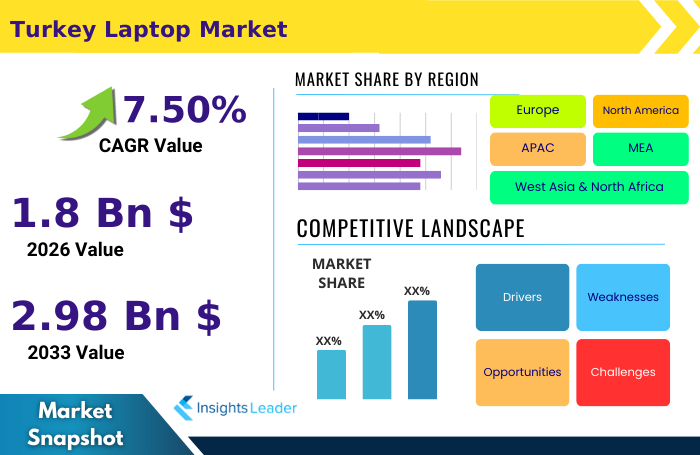
The Turkey Laptop Market Size in 2026 is estimated to be USD 1.8 Billion
What is the Growth Rate (CAGR) of Turkey Laptop Market?
The Turkey Laptop Market is expected to grow at 7.5% CAGR
What is the Market Size of the Turkey Laptop in 2033?
The Turkey Laptop Market Size in 2033 is estimated to be USD 2.98 Billion
What are DRO & Impact Forces?
Drivers (D) include increasing digitalization in education and corporate sectors, coupled with a high youth demographic demanding modern technology. Restraints (R) are primarily economic volatility and fluctuating local currency values, increasing import costs. Opportunities (O) lie in the expansion of high-performance gaming laptops and thin-and-light business models. Impact forces include global component supply chain shifts and local regulatory changes on import duties.
What is Impact of US tariffs?
While not directly targeting Turkey, US tariffs imposed on goods manufactured in certain Asian countries indirectly affect the Turkish laptop market by driving up the global cost of crucial components, such as processors, memory, and displays. This results in higher retail prices for finished laptops sold in Turkey, potentially dampening consumer demand, particularly in price-sensitive segments. Furthermore, supply chain reorganization due to tariffs can cause delivery delays and unpredictable inventory levels for Turkish retailers and distributors.
How is AI currently impacting industries globally?
AI is revolutionizing global industries by enabling advanced automation, predictive analytics, and personalized customer experiences across sectors like healthcare, finance, and manufacturing. In the technology sector, AI is driving demand for specific hardware accelerators (NPUs) within laptops, optimizing performance for machine learning tasks and influencing the design of next-generation operating systems and software features. This integration fundamentally shifts enterprise computing requirements and consumer expectations for device intelligence and efficiency.