Australia Radiology Information System Market Size and Insights – 2026 to 2033
Report ID : IL_6763 | Report Language's : En/Jp/Fr/De | Publisher : IL |
Format : 


What is the Market Size of the Australia Radiology Information System in 2026?
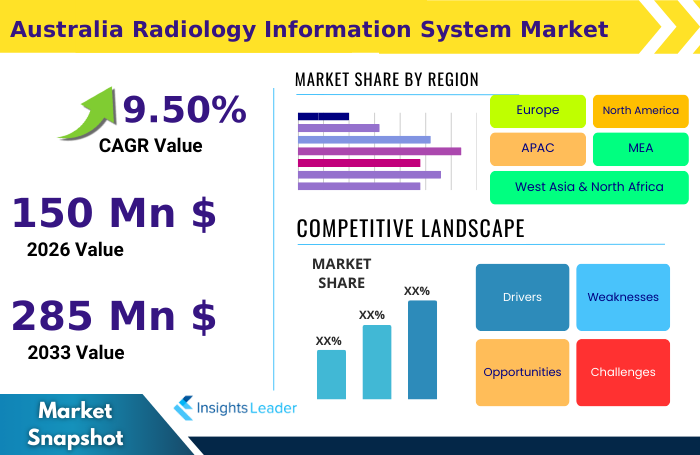
The Australia Radiology Information System Market Size in 2026 is estimated to be USD 150 Million
What is the Growth Rate (CAGR) of Australia Radiology Information System Market?
The Australia Radiology Information System Market is expected to grow at 9.5% CAGR
What is the Market Size of the Australia Radiology Information System in 2033?
The Australia Radiology Information System Market Size in 2033 is estimated to be USD 285 Million
What are DRO and Impact Forces of Australia Radiology Information System Market?
DRO refers to Drivers, Restraints, and Opportunities. Key drivers include increasing demand for workflow efficiency, rising adoption of digital health records, and government initiatives promoting e-health integration. Restraints often center on high initial capital investment and data security concerns, while opportunities emerge from AI integration and cloud-based deployment models.
What is Impact of U.S. Tariffs on Australia Radiology Information System Market?
The primary impact is indirect, affecting global supply chains for hardware components necessary for RIS infrastructure, such as servers and computing devices. This can increase procurement costs for international vendors supplying the Australian market, potentially leading to marginally higher system prices for local providers. However, direct tariffs on Australian RIS imports are minimal, mitigating large-scale market disruption.
How is AI currently impacting Australia Radiology Information System Market?
AI is revolutionizing global industries by enabling advanced automation, deep predictive analytics, and complex decision-support systems. In healthcare, AI significantly improves diagnostic accuracy in imaging (radiology), streamlines administrative burdens, and personalizes treatment protocols, leading to enhanced operational efficiency and optimized patient outcomes across the spectrum.