Malaysia Carbon Credits Market Size and Insights – 2026 to 2033
Report ID : IL_6266 | Report Language's : En/Jp/Fr/De | Publisher : IL |
Format : 


What is the Market Size of the Malaysia Carbon Credits in 2026?
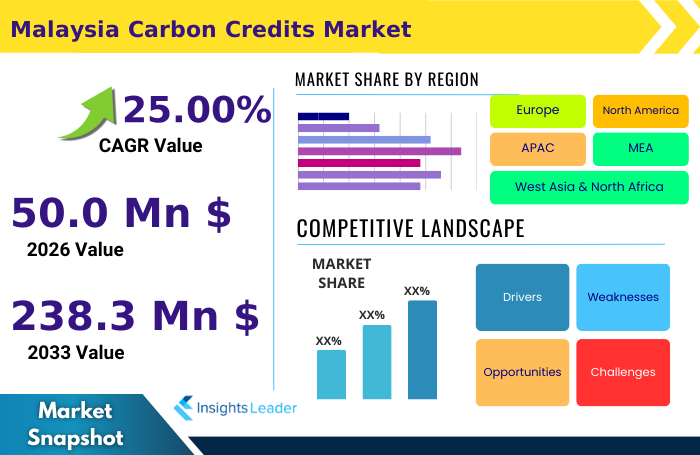
The Malaysia Carbon Credits Market Size in 2026 is estimated to be $50.0 Million USD
What is the Growth Rate (CAGR) of Malaysia Carbon Credits Market?
The Malaysia Carbon Credits Market is expected to grow at 25.0% CAGR
What is the Market Size of the Malaysia Carbon Credits in 2033?
The Malaysia Carbon Credits Market Size in 2033 is estimated to be $238.3 Million USD
What are DRO and Impact Forces of Malaysia Carbon Credits Market?
Drivers include stringent domestic environmental regulations, the operationalization of the Voluntary Carbon Market (VCM) via Bursa Malaysia, and rising corporate demand for Net-Zero alignment. Restraints involve the lack of standardized measurement methodologies, long verification cycles, and limited institutional capacity for large-scale project development. Opportunities are concentrated in nature-based solutions, particularly afforestation, reforestation, and blue carbon projects along coastal ecosystems.
What is Impact of U.S. Tariffs on Malaysia Carbon Credits Market?
The direct impact of US tariffs on the trading mechanism of carbon credits is minimal, as tariffs primarily target physical goods. However, the indirect impact is significant as tariffs increase the operational costs for Malaysian manufacturers exporting to the US, driving higher scrutiny on supply chain sustainability and increasing the likelihood that these companies will purchase domestic carbon offsets to mitigate reputational and future regulatory risks associated with trade.
How is AI currently impacting Malaysia Carbon Credits Market?
AI is revolutionizing global industries by automating complex data analysis, optimizing predictive maintenance schedules, and enabling hyper-personalized customer experiences. Specifically in climate-related fields, AI enhances the accuracy of carbon project monitoring through satellite imagery analysis, improves energy grid efficiency, and accelerates the development of novel sustainable materials via machine learning simulations.