Mexico Biological Microscope Market Size and Insights – 2026 to 2033
Report ID : IL_6223 | Report Language's : En/Jp/Fr/De | Publisher : IL |
Format : 


What is the Market Size of the Mexico Biological Microscope in 2026?
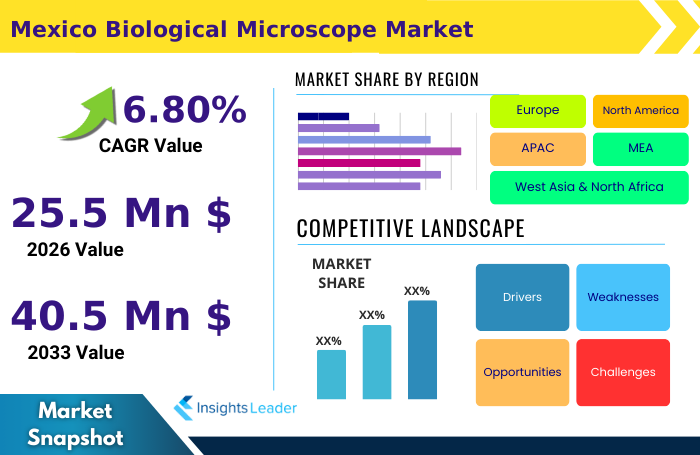
The Mexico Biological Microscope Market Size in 2026 is estimated to be USD 25.5 Million
What is the Growth Rate (CAGR) of Mexico Biological Microscope Market?
The Mexico Biological Microscope Market is expected to grow at 6.8% CAGR
What is the Market Size of the Mexico Biological Microscope in 2033?
The Mexico Biological Microscope Market Size in 2033 is estimated to be USD 40.5 Million
What are DRO and Impact Forces of Mexico Biological Microscope Market?
DRO refers to Drivers, Restraints, and Opportunities—the critical factors shaping market trajectory. Impact Forces include external macroeconomic, regulatory, and technological influences such as increased government funding for biomedical research (Driver), high initial equipment cost (Restraint), and the development of advanced digital imaging capabilities (Opportunity). Analyzing these forces provides a holistic view of potential market acceleration or deceleration.
What is Impact of U.S. Tariffs on Mexico Biological Microscope Market?
The primary impact of US tariffs on the Mexican biological microscope market is indirect, affecting the global supply chain stability and the cost of imported components and finalized equipment. Tariffs imposed by the US, especially on Chinese components or manufacturing, can lead to increased procurement costs for international vendors supplying the Mexican market. This cost escalation may be passed down to end-users (research institutions and hospitals) in Mexico, potentially hindering large-scale capital investments in advanced microscopy technology.
How is AI currently impacting Mexico Biological Microscope Market?
AI is revolutionizing global industries by enabling advanced automation, predictive maintenance, and sophisticated data analytics across sectors like healthcare, manufacturing, and finance. In biological research, AI significantly enhances diagnostic precision through automated image recognition and processing, accelerates drug discovery by analyzing complex datasets, and optimizes operational efficiency by automating laboratory workflows and quality control processes.