Russia Laptop Market Size and Insights – 2026 to 2033
Report ID : IL_3030 | Report Language's : En/Jp/Fr/De | Publisher : IL |
Format : 


What is the Market Size of the Russia Laptop in 2026?
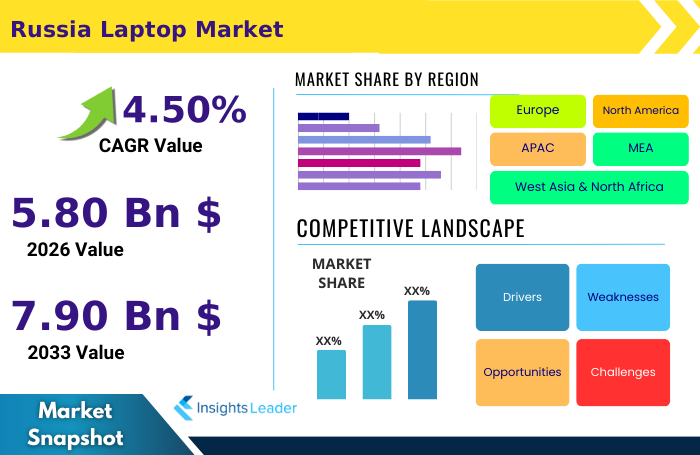
The Russia Laptop Market Size in 2026 is estimated to be USD 5.80 Billion
What is the Growth Rate (CAGR) of Russia Laptop Market?
The Russia Laptop Market is expected to grow at 4.5% CAGR
What is the Market Size of the Russia Laptop in 2033?
The Russia Laptop Market Size in 2033 is estimated to be USD 7.90 Billion
What are DRO & Impact Forces?
Drivers (D) include the escalating necessity for remote work solutions, increasing e-learning penetration, and robust demand growth within the specialized gaming segment. Restraints (R) primarily involve persistent geopolitical sanctions severely impacting supply chain accessibility, combined with significant currency volatility that raises import costs for crucial components and finished goods. Opportunities (O) emerge through enhanced collaboration with Asian suppliers and governmental initiatives encouraging domestic assembly and localized technology adoption to mitigate external risks.
What is Impact of US tariffs?
While direct across-the-board US tariffs may not be the primary mechanism impacting the Russian market, secondary economic sanctions, export controls, and restrictions on technology transfers (particularly regarding microprocessors and advanced components) create substantial hurdles. These geopolitical restraints force manufacturers to redesign supply chains, leading to increased operational complexity and higher procurement costs, ultimately resulting in elevated consumer prices and restricted availability of specific high-end models incorporating restricted technology.
How is AI currently impacting industries globally?
Artificial Intelligence is driving profound transformation across global industries by automating complex decision-making processes, optimizing logistical networks, and enabling predictive maintenance within manufacturing. In consumer electronics, AI integrates into device operating systems to personalize user interactions, optimize power consumption, and enhance computational performance for tasks like graphic rendering and data processing, setting a new benchmark for required hardware specifications globally.