South Africa PVC Compound Market Size and Insights – 2026 to 2033
Report ID : IL_5919 | Report Language's : En/Jp/Fr/De | Publisher : IL |
Format : 



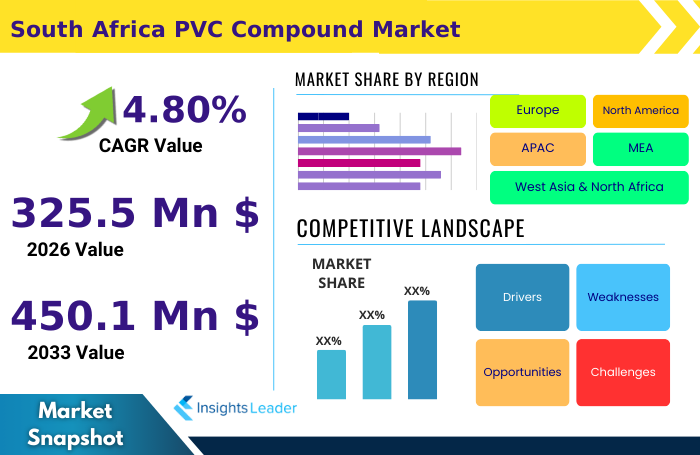
What is the Market Size of the South Africa PVC Compound in 2026?
The South Africa PVC Compound Market Size in 2026 is estimated to be USD 325.5 Million
What is the Growth Rate (CAGR) of South Africa PVC Compound Market?
The South Africa PVC Compound Market is expected to grow at 4.8% CAGR
What is the Market Size of the South Africa PVC Compound in 2033?
The South Africa PVC Compound Market Size in 2033 is estimated to be USD 450.1 Million
What are DRO and Impact Forces of South Africa PVC Compound Market?
DRO (Drivers, Restraints, and Opportunities) represents the fundamental forces dictating market movement. Drivers include robust infrastructural spending and demand from the construction sector, while Restraints typically involve volatile raw material pricing and stringent environmental regulations. Opportunities focus on innovation in sustainable PVC formulations and expanded application scope. These forces are critical determinants for strategic planning and competitive positioning within the industry.
What is Impact of U.S. Tariffs on South Africa PVC Compound Market?
The primary effect of US tariffs relevant to the South African PVC compound market is the global volatility induced in supply chains and raw material costs, particularly ethylene dichloride (EDC) and VCM. Although South Africa’s direct trade volume with the US in PVC compounds may be marginal, these tariffs often redirect global polymer trade flows. This can result in increased domestic competition from products diverted from tariff-affected regions, simultaneously increasing input costs for local manufacturers reliant on international sourcing.
How is AI currently impacting South Africa PVC Compound Market?
AI is fundamentally transforming global industries by integrating predictive maintenance, advanced demand forecasting, and fully automated quality control systems in manufacturing environments. This digital transformation leads to significant improvements in operational efficiency, reductions in waste generation, and faster time-to-market for complex products. Furthermore, AI enhances data analysis capabilities, enabling companies to derive critical strategic insights from large datasets to optimize resource allocation and personalize customer experiences globally.