Argentina Vertical Farming Market Size and Insights – 2026 to 2033
Report ID : IL_6832 | Report Language's : En/Jp/Fr/De | Publisher : IL |
Format : 


What is the Market Size of the Argentina Vertical Farming in 2026?
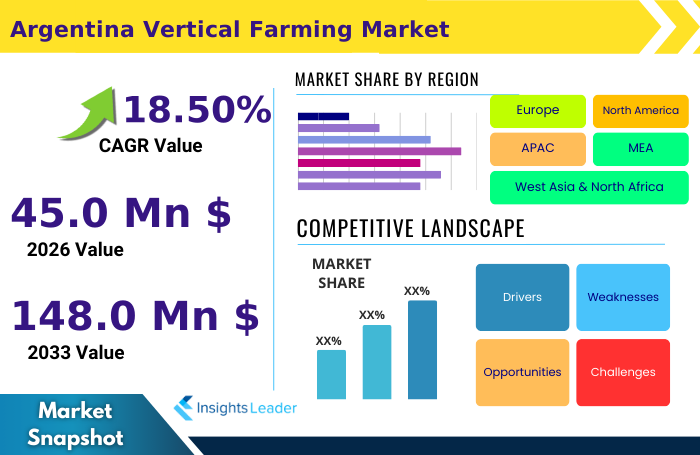
The Argentina Vertical Farming Market Size in 2026 is estimated to be USD 45.0 Million
What is the Growth Rate (CAGR) of Argentina Vertical Farming Market?
The Argentina Vertical Farming Market is expected to grow at CAGR 18.5%
What is the Market Size of the Argentina Vertical Farming in 2033?
The Argentina Vertical Farming Market Size in 2033 is estimated to be USD 148.0 Million
What are DRO and Impact Forces of Argentina Vertical Farming Market?
Drivers: Severe climate variability impacting traditional agriculture, increasing consumer demand for locally sourced and pesticide-free produce, and rapid urbanization limiting arable land availability in metropolitan areas like Buenos Aires.Restraints: High initial capital expenditure requirements for setting up sophisticated CEA systems, unstable domestic energy prices and unreliable grid infrastructure, and a shortage of skilled labor proficient in farm technology integration and management.Opportunities: Government incentives targeting sustainable urban development, potential for specialized high-value crop cultivation (herbs, medicinal plants), and adoption of modular or containerized farming solutions to lower entry barriers.
What is Impact of U.S. Tariffs on Argentina Vertical Farming Market?
While direct agricultural tariffs do not significantly affect locally consumed vertical farm products, US tariffs increase the cost of essential technology imports (LED lighting, sophisticated sensors, and climate control hardware) into Argentina. This escalation in CapEx and operating expenses for imported components acts as a substantial cost barrier for widespread technology adoption and expansion within the Argentine vertical farming sector.
How is AI currently impacting Argentina Vertical Farming Market?
Artificial Intelligence (AI) is transforming global industries by enabling predictive maintenance, optimizing supply chains through sophisticated forecasting algorithms, and enhancing automation across manufacturing and logistics. In vertical farming, AI drives climate optimization (humidity, CO2, temperature), precise nutrient dosing via machine learning models, and automated pest and disease detection, drastically improving yield consistency and resource efficiency globally.