Asia-Pacific Contact Lenses Market Size and Insights – 2026 to 2033
Report ID : IL_6773 | Report Language's : En/Jp/Fr/De | Publisher : IL |
Format : 


What is the Market Size of the Asia-Pacific Contact Lenses in 2026?
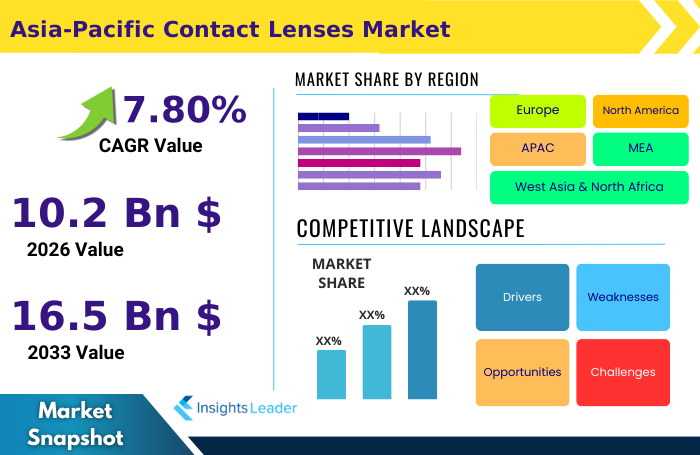
The Asia-Pacific Contact Lenses Market Size in 2026 is estimated to be $10.2 Billion
What is the Growth Rate (CAGR) of Asia-Pacific Contact Lenses Market?
The Asia-Pacific Contact Lenses Market is expected to grow at 7.8% CAGR
What is the Market Size of the Asia-Pacific Contact Lenses in 2033?
The Asia-Pacific Contact Lenses Market Size in 2033 is estimated to be $16.5 Billion
What are DRO and Impact Forces of Asia-Pacific Contact Lenses Market?
DRO refers to Drivers, Restraints, and Opportunities—the fundamental dynamic forces shaping the market trajectory. Drivers include the rising prevalence of myopia and increasing aesthetic preferences, while Restraints often involve high replacement costs and risk of ocular infections. Opportunities emerge from advanced materials science and the development of specialized lenses, such as multifocal and smart contact lenses.
What is Impact of U.S. Tariffs on Asia-Pacific Contact Lenses Market?
The impact of US tariffs on the Asia-Pacific contact lenses market is primarily felt through supply chain disruptions and increased cost volatility for imported raw materials (e.g., silicone hydrogel polymers). While tariffs directly target specific trade routes, the global interdependence of medical device supply chains means increased operational expenses, potentially leading to higher consumer prices across the APAC region and encouraging localized manufacturing strategies.
How is AI currently impacting Asia-Pacific Contact Lenses Market?
Artificial intelligence is fundamentally transforming global industries by optimizing operational efficiency and enabling advanced personalized services. Key impacts include AI-driven automation in manufacturing, predictive maintenance in logistics, and sophisticated data analysis for market forecasting. In healthcare, specifically, AI assists in diagnostic accuracy, personalized patient fitting of devices, and streamlining research and development processes for next-generation products.