Belgium Dyes And Pigments Market Size and Insights – 2026 to 2033
Report ID : IL_6724 | Report Language's : En/Jp/Fr/De | Publisher : IL |
Format : 


What is the Market Size of the Belgium Dyes And Pigments in 2026?
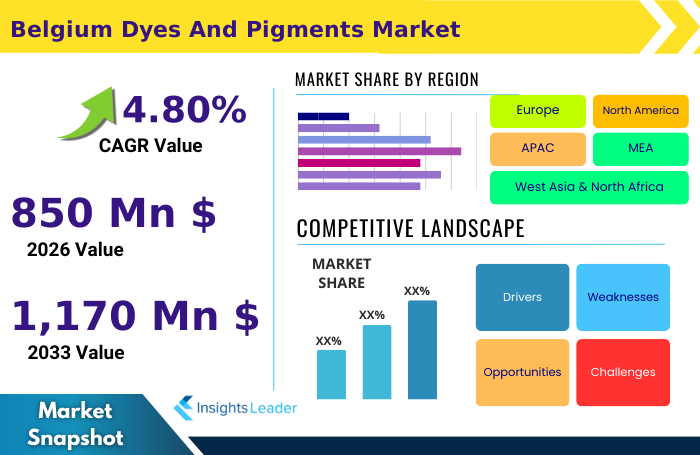
The Belgium Dyes And Pigments Market Size in 2026 is estimated to be $850 Million USD
What is the Growth Rate (CAGR) of Belgium Dyes And Pigments Market?
The Belgium Dyes And Pigments Market is expected to grow at 4.8% CAGR
What is the Market Size of the Belgium Dyes And Pigments in 2033?
The Belgium Dyes And Pigments Market Size in 2033 is estimated to be $1,170 Million USD
What are DRO and Impact Forces of Belgium Dyes And Pigments Market?
Drivers (D) include strong demand from the automotive refinish and packaging industries, alongside increased infrastructure projects requiring high-performance coatings. Restraints (R) primarily involve stringent EU environmental regulations concerning Volatile Organic Compounds (VOCs) and disposal of traditional heavy-metal-based pigments, increasing compliance costs for manufacturers. Opportunities (O) center on developing sustainable, bio-based dyes and pigments, and expanding into specialized applications like digital textile printing.
What is Impact of U.S. Tariffs on Belgium Dyes And Pigments Market?
The direct impact of US tariffs on the Belgian Dyes and Pigments market is relatively moderate, as most trade occurs within the EU Single Market. However, indirect effects manifest through disrupted global chemical supply chains, particularly concerning key intermediates and raw materials sourced from regions subject to tariffs, leading to increased input costs and potential inventory delays. This supply chain volatility encourages Belgian manufacturers to prioritize sourcing within the European Union to ensure resilience and predictability.
How is AI currently impacting Belgium Dyes And Pigments Market?
Artificial Intelligence is transforming global industries by optimizing complex supply chain logistics, enabling predictive maintenance in manufacturing, and accelerating materials discovery in R&D. Specifically, in the chemicals sector, AI algorithms are used to predict the stability and color characteristics of novel pigment formulations and optimize energy consumption during large-scale chemical synthesis processes, leading to significant reductions in operational waste and time-to-market.