North America Carpooling Market Size and Insights – 2026 to 2033
Report ID : IL_6091 | Report Language's : En/Jp/Fr/De | Publisher : IL |
Format : 


What is the Market Size of the North America Carpooling in 2026?
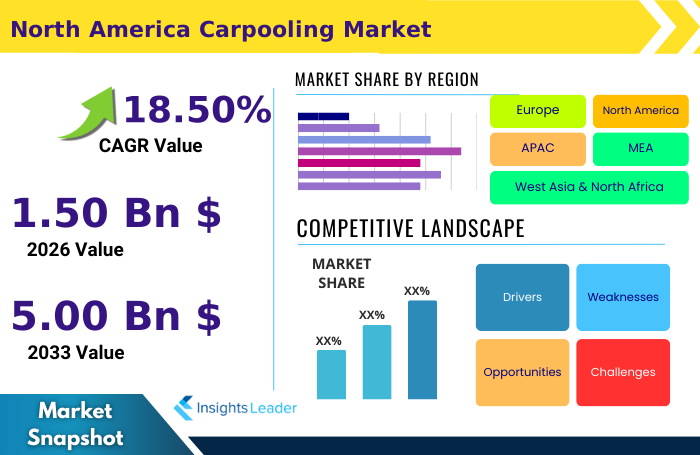
The North America Carpooling Market Size in 2026 is estimated to be $1.50 Billion
What is the Growth Rate (CAGR) of North America Carpooling Market?
The North America Carpooling Market is expected to grow at 18.5% CAGR
What is the Market Size of the North America Carpooling in 2033?
The North America Carpooling Market Size in 2033 is estimated to be $5.00 Billion
What are DRO and Impact Forces of North America Carpooling Market?
Drivers include rising fuel costs, increasing urban congestion, and governmental emphasis on sustainable transportation solutions. Restraints involve prevalent user safety concerns, competition from advanced public transit networks, and regulatory hurdles regarding insurance liability. Opportunities are concentrated in corporate partnerships for employee commute solutions and the integration of carpooling services within broader Mobility-as-a-Service (MaaS) platforms across major metropolitan areas.
What is Impact of U.S. Tariffs on North America Carpooling Market?
While direct tariffs do not typically target digital carpooling platforms, they indirectly affect the market by increasing the cost of vehicle ownership and maintenance due to tariffs on imported auto components and raw materials. This heightened cost pressure incentivizes consumers to seek out shared mobility options like carpooling as a more cost-effective alternative to private vehicle usage, thereby stimulating adoption rates.
How is AI currently impacting North America Carpooling Market?
Artificial Intelligence is driving significant efficiency gains through predictive demand forecasting, optimizing resource allocation, and implementing sophisticated personalization engines across various sectors. In mobility, AI enhances route optimization, enables dynamic pricing based on real-time factors like traffic and weather, and significantly improves safety through advanced driver monitoring and fraud detection systems, setting new operational standards globally.