North America Dinnerware Market Size and Insights – 2026 to 2033
Report ID : IL_6107 | Report Language's : En/Jp/Fr/De | Publisher : IL |
Format : 


What is the Market Size of the North America Dinnerware in 2026?
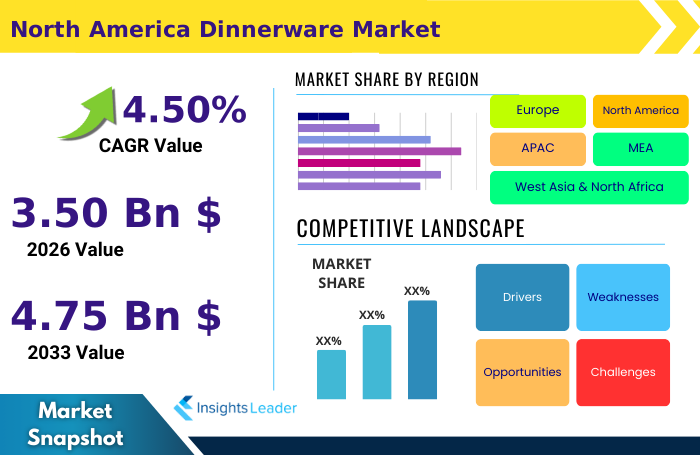
The North America Dinnerware Market Size in 2026 is estimated to be USD 3.50 Billion
What is the Growth Rate (CAGR) of North America Dinnerware Market?
The North America Dinnerware Market is expected to grow at 4.5% CAGR
What is the Market Size of the North America Dinnerware in 2033?
The North America Dinnerware Market Size in 2033 is estimated to be USD 4.75 Billion
What are DRO and Impact Forces of North America Dinnerware Market?
DRO stands for Drivers, Restraints, and Opportunities, which are critical factors that influence market trajectory. Drivers include rising disposable incomes and shifting consumer preferences toward premium, specialized, and sustainable dinnerware sets. Restraints often involve supply chain volatility and the high cost of raw materials such as specialized ceramics or fine bone china. Opportunities focus on e-commerce expansion and customization trends.
What is Impact of U.S. Tariffs on North America Dinnerware Market?
The implementation of US tariffs on imported goods, particularly those sourced from key manufacturing hubs in Asia, has significantly increased the landed cost of finished dinnerware products in North America. This inflationary pressure forces retailers and distributors to either absorb costs, reducing margins, or pass them onto the consumer, potentially slowing demand. Furthermore, tariffs incentivize the diversification of supply chains, moving production or sourcing to non-tariffed regions or fostering a limited return to domestic manufacturing.
How is AI currently impacting North America Dinnerware Market?
Artificial Intelligence is driving profound transformations globally through enhanced operational efficiency and data-driven decision-making, particularly in manufacturing and retail. AI optimizes complex supply chains, predicting demand fluctuations and minimizing waste in production. In consumer-facing industries, AI powers personalized marketing, advanced inventory management systems, and improved customer service interfaces, ultimately lowering labor costs and increasing overall enterprise throughput.