Norway Cyber Security Market Size and Insights – 2026 to 2033
Report ID : IL_3052 | Report Language's : En/Jp/Fr/De | Publisher : IL |
Format : 


What is the Market Size of the Norway Cyber Security in 2026?
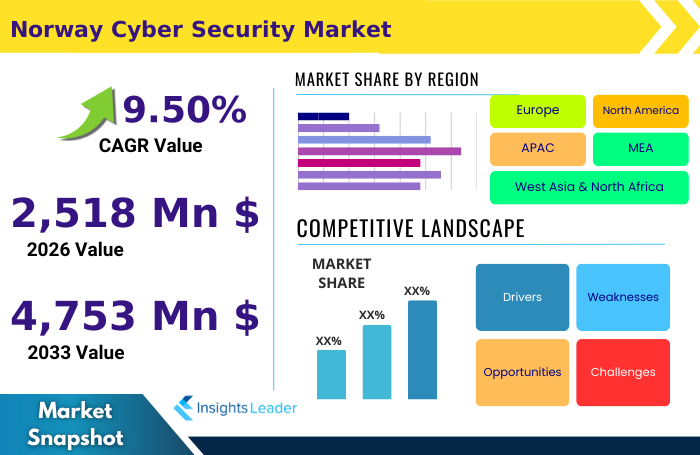
The Norway Cyber Security Market Size in 2026 is estimated to be USD 2,518 Million
What is the Growth Rate (CAGR) of Norway Cyber Security Market?
The Norway Cyber Security Market is expected to grow at 9.5% CAGR
What is the Market Size of the Norway Cyber Security in 2033?
The Norway Cyber Security Market Size in 2033 is estimated to be USD 4,753 Million
What are DRO & Impact Forces?
DRO (Drivers, Restraints, Opportunities) are core strategic factors shaping market trajectory. Key drivers include mandatory governmental digitalization initiatives and increasing sophistication of state-sponsored threats targeting critical infrastructure, such as the energy sector. Restraints include the chronic shortage of skilled cybersecurity professionals and the high initial investment required for implementing advanced zero-trust architectures. Opportunities lie within the rapid adoption of cloud security services and security orchestration, automation, and response (SOAR) platforms.
What is Impact of US tariffs?
The direct impact of US tariffs on the Norwegian cyber security market is generally moderate but noticeable in specific segments related to hardware components and certain specialized software licenses originating from or routed through the US supply chain. Tariffs primarily increase the acquisition cost for physical appliances like firewalls and intrusion detection systems, pushing Norwegian enterprises towards domestically compliant or European solution providers. This dynamic fosters increased reliance on subscription-based software-as-a-service (SaaS) models, which are less susceptible to hardware-centric tariff fluctuations, thus accelerating cloud migration strategies among enterprises.
How is AI currently impacting industries globally?
AI is fundamentally redefining threat landscapes and defense mechanisms across all industries globally by enabling hyper-personalized and automated threat detection, incident response, and vulnerability management. Conversely, malicious actors are increasingly leveraging generative AI and machine learning models to craft sophisticated phishing campaigns and polymorphic malware that can evade traditional security protocols. Industries are focusing substantial investments on integrating AI for predictive security analytics, aiming to shift from reactive defense strategies to proactive threat anticipation and eradication across complex hybrid environments.