Poland Dyes And Pigments Market Size and Insights – 2026 to 2033
Report ID : IL_6044 | Report Language's : En/Jp/Fr/De | Publisher : IL |
Format : 


What is the Market Size of the Poland Dyes And Pigments in 2026?
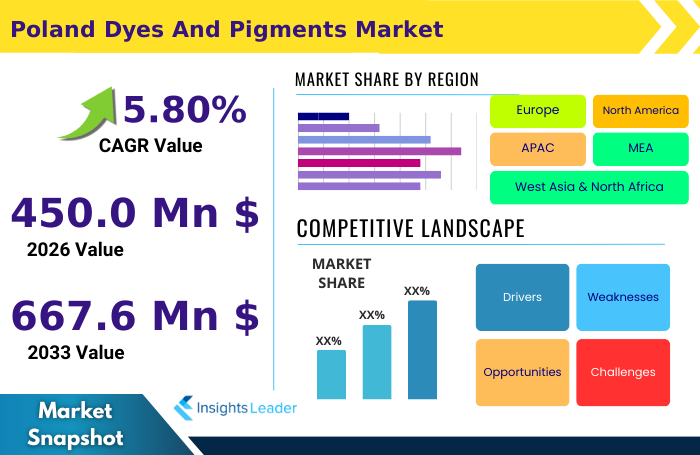
The Poland Dyes And Pigments Market Size in 2026 is estimated to be USD 450.0 Million
What is the Growth Rate (CAGR) of Poland Dyes And Pigments Market?
The Poland Dyes And Pigments Market is expected to grow at CAGR 5.8%
What is the Market Size of the Poland Dyes And Pigments in 2033?
The Poland Dyes And Pigments Market Size in 2033 is estimated to be USD 667.6 Million
What are DRO and Impact Forces of Poland Dyes And Pigments Market?
DRO refers to Drivers, Restraints, and Opportunities, which are fundamental forces shaping market dynamics. Drivers include the robust growth in the Polish construction and automotive sectors, increasing demand for specialty coatings, and stringent regulatory mandates favoring eco-friendly pigments. Restraints often involve fluctuating raw material costs, particularly petrochemical derivatives, and intense competition from Asian manufacturers leading to pricing pressures. Opportunities lie in developing high-performance, sustainable, and bio-based colorants for advanced applications.
What is Impact of U.S. Tariffs on Poland Dyes And Pigments Market?
The direct impact of US tariffs on the Poland Dyes and Pigments market is generally moderate, as trade primarily operates within the EU and focuses on regional supply chains. However, secondary impacts include global supply chain disruption and increased cost of certain intermediate chemicals imported from tariff-affected regions. This can lead to localized inflation in raw material procurement for Polish pigment manufacturers, ultimately affecting final product pricing and export competitiveness outside the EU single market.
How is AI currently impacting Poland Dyes And Pigments Market?
AI is fundamentally transforming global manufacturing through predictive maintenance, optimizing complex chemical synthesis processes, and enhancing supply chain efficiency. It facilitates accelerated R&D for novel materials and formulations, allowing companies to quickly screen potential pigment chemistries and reduce time-to-market. Furthermore, AI-driven data analytics improves market demand forecasting and personalized customer service in the specialty chemicals sector.