Sweden Video Camera Market Size and Insights – 2026 to 2033
Report ID : IL_2981 | Report Language's : En/Jp/Fr/De | Publisher : IL |
Format : 


What is the Market Size of the Sweden Video Camera in 2026?
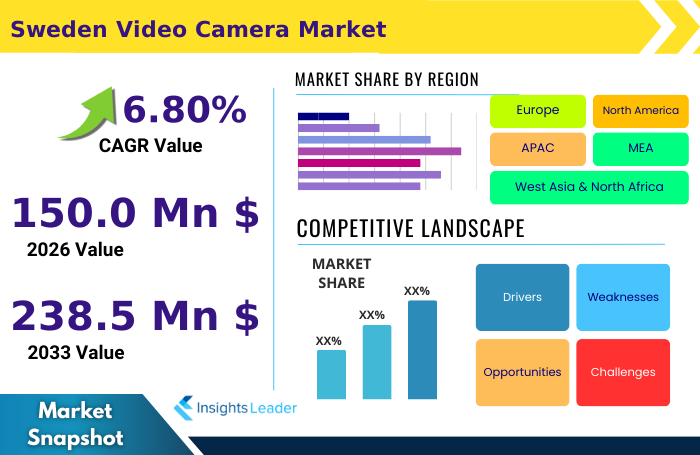
The Sweden Video Camera Market Size in 2026 is estimated to be $150.0 Million USD
What is the Growth Rate (CAGR) of Sweden Video Camera Market?
The Sweden Video Camera Market is expected to grow at 6.8% CAGR
What is the Market Size of the Sweden Video Camera in 2033?
The Sweden Video Camera Market Size in 2033 is estimated to be $238.5 Million USD
What are DRO & Impact Forces?
DRO stands for Drivers, Restraints, and Opportunities, the foundational elements determining market direction. Drivers propel market growth through increased demand or technological adoption, such as rising demand for high-definition surveillance solutions in the Swedish corporate sector. Restraints include high initial investment costs and saturation in certain consumer segments. Opportunities lie in the emerging professional content creation niche and public sector infrastructure upgrades.
What is Impact of US tariffs?
While Sweden is geographically distinct from the US, global geopolitical tariffs, particularly those affecting key manufacturing hubs in Asia, exert indirect influence on the video camera market. These tariffs can disrupt the global semiconductor and component supply chain, leading to increased landed costs for specialized camera equipment in the Swedish market. This potentially translates into higher consumer prices and margin pressure for local distributors.
How is AI currently impacting industries globally?
AI is fundamentally transforming industries by enabling unprecedented levels of automation, predictive analytics, and enhanced sensory capabilities. In the video camera industry, AI is crucial for real-time video processing, facial recognition, advanced object tracking in surveillance systems, and automated scene optimization in consumer and professional cameras. Globally, AI integration is shifting camera capabilities from simple recording devices to intelligent data capture platforms, driving demand for edge computing in imaging hardware.