Spain Smart Cities Market Size and Insights – 2026 to 2033
Report ID : IL_5819 | Report Language's : En/Jp/Fr/De | Publisher : IL |
Format : 


What is the Market Size of the Spain Smart Cities in 2026?
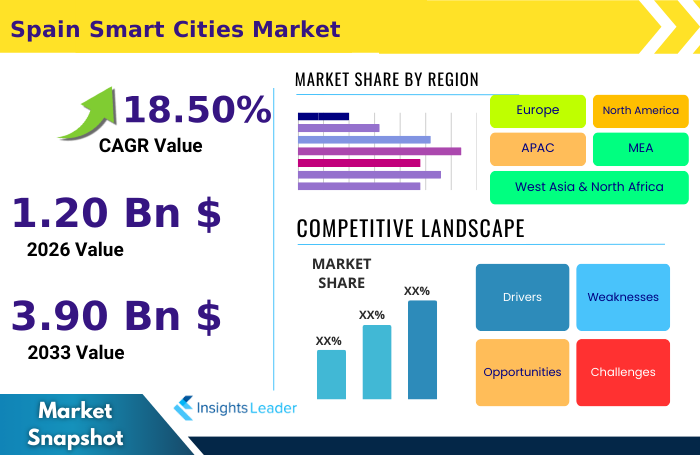
The Spain Smart Cities Market Size in 2026 is estimated to be $1.20 Billion
What is the Growth Rate (CAGR) of Spain Smart Cities Market?
The Spain Smart Cities Market is expected to grow at CAGR 18.5%
What is the Market Size of the Spain Smart Cities in 2033?
The Spain Smart Cities Market Size in 2033 is estimated to be $3.90 Billion
What are DRO and Impact Forces of Spain Smart Cities Market?
DRO refers to Drivers, Restraints, and Opportunities. Key drivers include substantial EU recovery funding (NextGenerationEU), strong government commitment through the National Smart Cities Plan, and the need for enhanced urban sustainability in high-density areas. Restraints involve the high initial capital investment required for infrastructure upgrades and ongoing challenges related to data privacy compliance. Opportunities are centered on integrating 5G infrastructure, developing advanced AI-powered urban governance platforms, and expanding public-private collaboration models.
What is Impact of U.S. Tariffs on Spain Smart Cities Market?
The direct impact of US tariffs on the Spanish Smart Cities Market is relatively moderated due to Spain’s deep integration within the EU single market and diversified supply chains. However, tariffs targeting specialized ICT hardware, microprocessors, and advanced networking components sourced globally can indirectly increase procurement costs for Spanish municipal projects. This cost inflation might slow down the pace of specific technology deployments, although EU funding initiatives are generally structured to offset minor external supply chain volatilities, ensuring project continuity.
How is AI currently impacting Spain Smart Cities Market?
AI is fundamentally transforming global industries by driving unprecedented optimization in operational efficiencies and decision-making processes, primarily through predictive analytics and hyper-automation. Globally, it enables personalized services in healthcare, optimizes complex logistics and supply chains, and accelerates research and development cycles. For smart cities, AI facilitates real-time traffic management, dynamic energy grid optimization, and enhanced public safety services, making urban governance substantially more responsive and efficient.