North America Application Security Market Size and Insights – 2026 to 2033
Report ID : IL_6105 | Report Language's : En/Jp/Fr/De | Publisher : IL |
Format : 


What is the Market Size of the North America Application Security in 2026?
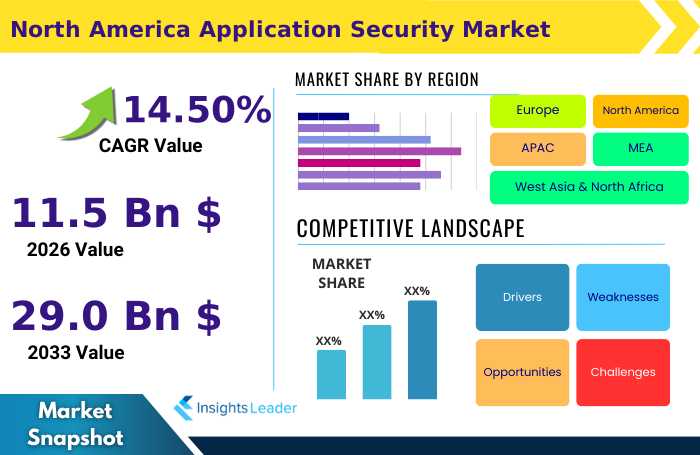
The North America Application Security Market Size in 2026 is estimated to be USD 11.5 Billion
What is the Growth Rate (CAGR) of North America Application Security Market?
The North America Application Security Market is expected to grow at CAGR 14.5%
What is the Market Size of the North America Application Security in 2033?
The North America Application Security Market Size in 2033 is estimated to be USD 29.0 Billion
What are DRO and Impact Forces of North America Application Security Market?
DRO (Drivers, Restraints, Opportunities) are the fundamental factors shaping market trajectory. Drivers include the accelerating adoption of DevOps, stringent regulatory mandates (e.g., CCPA, HIPAA), and the increasing frequency of sophisticated application-layer attacks. Restraints encompass high initial deployment costs and a persistent shortage of skilled cybersecurity professionals. Opportunities lie in integrating advanced security features like AI/ML into security testing tools (DAST, SAST) and expanding coverage to niche sectors.
What is Impact of U.S. Tariffs on North America Application Security Market?
While the Application Security market primarily deals with intangible software services, the indirect impact of US tariffs relates to supply chain disruption in the hardware and networking sectors critical for deployment infrastructure. Tariffs can raise the cost of foundational IT equipment, potentially delaying large-scale security adoption projects for smaller and medium-sized enterprises (SMEs) relying heavily on imported technology components, though the direct impact on application security software providers remains low.
How is AI currently impacting North America Application Security Market?
AI is revolutionizing global industries by driving efficiency gains, enabling advanced predictive analytics, and automating complex processes previously requiring human intervention. In cybersecurity, AI facilitates rapid threat detection and response; in healthcare, it accelerates diagnostics and personalized medicine; and in finance, it enhances fraud detection and algorithmic trading capabilities, leading to substantial shifts in operational models and workforce requirements worldwide.