Indonesia Wearable Technology Market Size and Insights – 2026 to 2033
Report ID : IL_3133 | Report Language's : En/Jp/Fr/De | Publisher : IL |
Format : 


What is the Market Size of the Indonesia Wearable Technology in 2026?
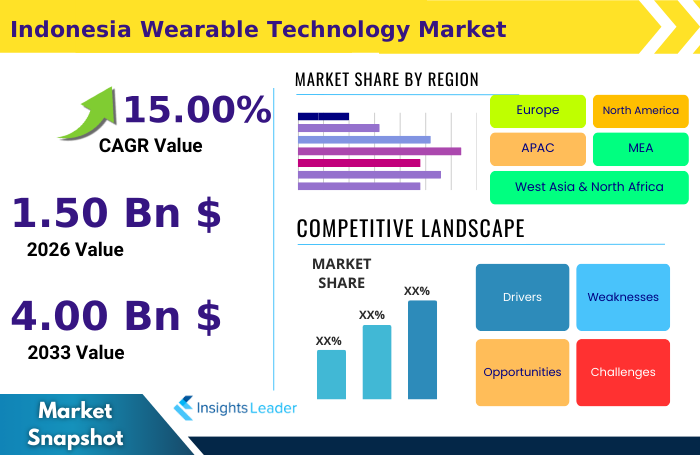
The Indonesia Wearable Technology Market Size in 2026 is estimated to be USD 1.50 Billion
What is the Growth Rate (CAGR) of Indonesia Wearable Technology Market?
The Indonesia Wearable Technology Market is expected to grow at 15.00% CAGR
What is the Market Size of the Indonesia Wearable Technology in 2033?
The Indonesia Wearable Technology Market Size in 2033 is estimated to be USD 4.00 Billion
What are DRO & Impact Forces?
DRO refers to Drivers, Restraints, and Opportunities, which collectively analyze the internal and external forces shaping market trajectory. Drivers propel growth, such as increasing health consciousness and smartphone penetration, while Restraints are barriers, like high initial cost or data security concerns. Opportunities highlight new avenues for expansion, such as integration with telemedicine or specialized enterprise applications.
What is Impact of US tariffs?
US tariffs primarily affect global supply chains for electronic components and finished goods manufactured in targeted regions. This impact typically results in increased operational costs for manufacturers, potentially leading to higher retail prices for wearable technology in Indonesia. While Indonesia is not directly targeted, its market is affected indirectly through global price synchronization and component scarcity, potentially slowing price accessibility for mass-market consumers.
How is AI currently impacting industries globally?
AI is revolutionizing industries globally by enabling sophisticated data processing, predictive analytics, and process automation. In the wearable sector, AI powers personalized health recommendations, highly accurate biometric monitoring, and adaptive user interfaces, significantly enhancing device functionality and user engagement. Furthermore, AI is crucial in optimizing manufacturing logistics and supply chain efficiency across all technology-driven markets.