Brazil Wearable Technology Market Size and Insights – 2026 to 2033
Report ID : IL_3203 | Report Language's : En/Jp/Fr/De | Publisher : IL |
Format : 


What is the Market Size of the Brazil Wearable Technology in 2026?
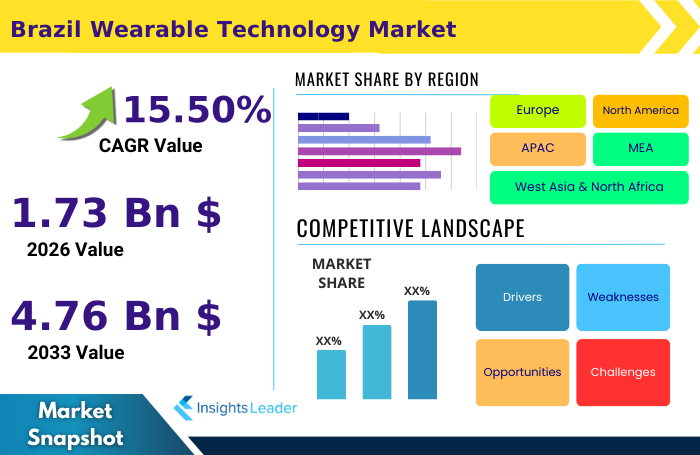
The Brazil Wearable Technology Market Size in 2026 is estimated to be USD 1.73 Billion
What is the Growth Rate (CAGR) of Brazil Wearable Technology Market?
The Brazil Wearable Technology Market is expected to grow at CAGR 15.5%
What is the Market Size of the Brazil Wearable Technology in 2033?
The Brazil Wearable Technology Market Size in 2033 is estimated to be USD 4.76 Billion
What are DRO & Impact Forces?
DRO (Drivers, Restraints, and Opportunities) analysis reveals that market expansion is driven by increasing health consciousness, high smartphone penetration, and consumer demand for digital fitness tracking. Restraints include high import tariffs and data privacy concerns. Opportunities lie in integrating advanced telemedicine services and expanding into industrial safety wearables, leveraging Brazil’s push for digital transformation across sectors.
What is Impact of US tariffs?
The primary impact of US tariffs is indirect, influencing global semiconductor and electronic component costs, which are then reflected in the imported prices of finished goods entering Brazil. This leads to higher retail prices, potentially suppressing demand for high-end devices and favoring local assembly operations or more affordable imported brands. This external cost pressure complicates inventory management and pricing strategies for regional distributors.
How is AI currently impacting industries globally?
Artificial Intelligence is transforming global industries by enabling unprecedented levels of operational efficiency, personalization, and predictive capabilities, especially in logistics, manufacturing, and healthcare. For wearables, AI enhances biometric data processing, offering sophisticated personalized health insights, advanced predictive maintenance capabilities in industrial settings, and refined user experiences that extend beyond simple data aggregation to actionable health guidance.