China LNG Bunkering Market Size and Insights – 2026 to 2033
Report ID : IL_16807 | Report Language's : En/Jp/Fr/De | Publisher : IL |
Format : 


What is the Market Size of the China LNG Bunkering in 2026?
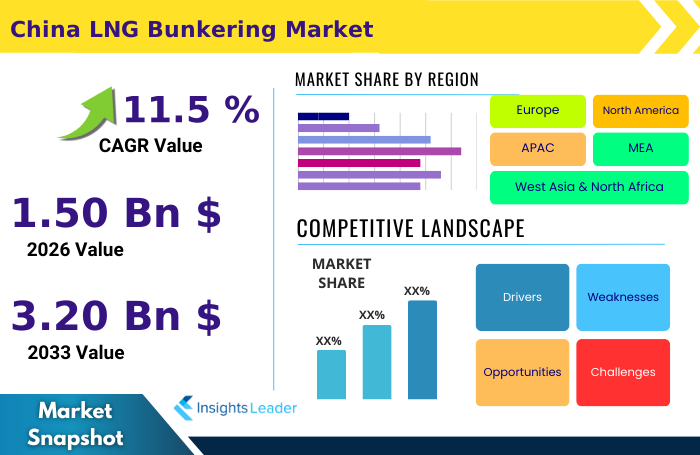
The China LNG Bunkering Market Size in 2026 is estimated to be USD 1.50 Billion
What is the Growth Rate (CAGR) of China LNG Bunkering Market?
The China LNG Bunkering Market is expected to grow at 11.5% CAGR
What is the Market Size of the China LNG Bunkering in 2033?
The China LNG Bunkering Market Size in 2033 is estimated to be USD 3.20 Billion
Report Snapshot
| Report Attributes | Report Details |
|---|---|
| Forecast Year | 2033 |
| CAGR | 11.5% |
| History Year | 2016-2024 |
| Market Size in 2026 | 1.50 Billion USD$ |
| Market Size in 2033 | 3.20 Billion USD$ |
What are DRO & Impact Forces of China LNG Bunkering Market?
Drivers: Stringent environmental regulations (IMO 2020 compliance and future decarbonization goals), significant governmental push and subsidies supporting clean maritime fuels, and rapid infrastructure development in key coastal ports.Restraints: High initial capital expenditure required for converting existing vessels or building new LNG-fueled fleets, potential volatility in global LNG prices compared to traditional bunker fuels, and limited cross-border refueling network integration.Opportunities: Expansion into small-scale LNG (SSLNG) infrastructure serving regional domestic routes, technological advancements in bunkering methods (Ship-to-Ship and truck-to-ship), and the potential integration of bio-LNG as a sustainable transition fuel.
What is Impact of US Tariffs on China LNG Bunkering Market?
The direct impact of U.S. tariffs on LNG bunkering infrastructure build-out is minimal, as development is driven by domestic policy mandates and global shipping decarbonization standards.However, prolonged geopolitical tensions and retaliatory tariffs can depress overall container and bulk trade volumes flowing through major Chinese ports, leading to a marginal temporary reduction in overall bunker demand.Tariffs may indirectly affect the cost and stability of the imported LNG supply chain, influencing long-term procurement strategies for bunkering operators within the region.
How is AI currently impacting China LNG Bunkering Market?
AI applications are optimizing complex logistics, allowing for precise, real-time coordination of LNG bunker deliveries and minimizing vessel waiting times at high-traffic ports. Predictive analytics leverage historical consumption and operational data to forecast future LNG demand, aiding procurement and inventory management, thereby reducing hedging risks associated with price fluctuations. AI-driven predictive maintenance systems are being implemented to monitor the health of bunkering vessels and shore-based liquefaction terminals, ensuring operational reliability and enhancing safety compliance.
China LNG Bunkering Market Research Report – Table of Contents
1. Executive Summary
2. Introduction & Research Objectives
3. Scope of the Study
4. Research Methodology of China LNG Bunkering Market
5. China LNG Bunkering Market Overview & Industry Background
6. China LNG Bunkering Market Size & Forecast Analysis
7. China LNG Bunkering Market Segmentation Analysis
8. Competitive Landscape
9. Consumer Behavior & Demand Analysis
10. Pricing & Cost Structure Analysis
11. China LNG Bunkering Market Drivers, Challenges & Risks
12. Regulatory & Policy Framework
13. Technology & Innovation Impact
14. Strategic Insights & Recommendations
15. Conclusion & Future Outlook
For more queries, kindly contact [email protected]