Poland Leather Goods Market Size and Insights – 2026 to 2033
Report ID : IL_7841 | Report Language's : En/Jp/Fr/De | Publisher : IL |
Format : 


What is the Market Size of the Poland Leather Goods in 2026?
The Poland Leather Goods Market Size in 2026 is estimated to be $1.25 Billion
What is the Growth Rate (CAGR) of Poland Leather Goods Market?
The Poland Leather Goods Market is expected to grow at 5.5% CAGR
What is the Market Size of the Poland Leather Goods in 2033?
The Poland Leather Goods Market Size in 2033 is estimated to be $1.82 Billion
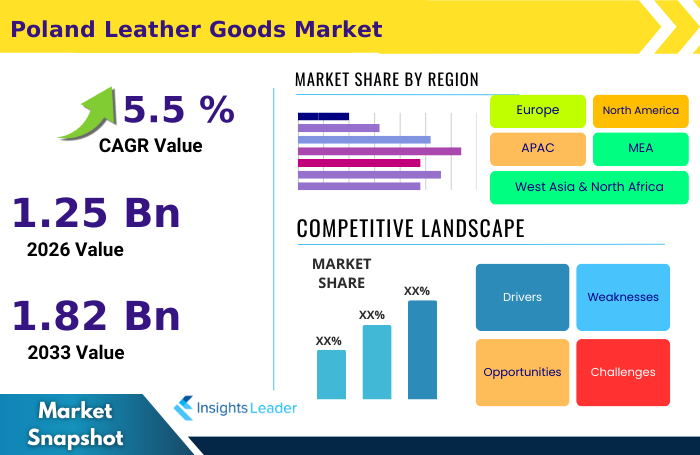
Report Snapshot
| Report Attributes | Report Details |
|---|---|
| Forecast Year | 2033 |
| CAGR | 5.5% |
| History Year | 2016-2024 |
| Market Size in 2026 | 1.25 Billion |
| Market Size in 2033 | 1.82 Billion |
What are DRO and Impact Forces of Poland Leather Goods Market?
Drivers, Restraints, and Opportunities (DRO) are the foundational factors determining market performance. Drivers, such as increasing urbanization and rising fashion consciousness among Polish consumers, propel market expansion and demand for premium leather accessories. Restraints typically include escalating costs of raw materials, particularly imported hides, and intense competition from high-quality synthetic and vegan leather alternatives which offer competitive pricing and sustainable positioning. Opportunities center on leveraging advanced e-commerce penetration and developing specialized niche products like sustainable or custom-made leather items, targeting affluent segments ready to pay a premium for certified ethical sourcing and craftsmanship, thereby enhancing strategic growth prospects across the industry.
What is Impact of U.S. Tariffs on Poland Leather Goods Market?
The direct impact of existing US tariffs on Polish leather goods exports is relatively contained, as the primary export markets for Polish producers remain within the European Union (EU) and neighboring Eastern European countries. However, indirect impacts arise from global supply chain disruptions caused by tariffs, particularly those affecting key inputs. Increased trade friction between major global economies, such as the US and China, results in volatile commodity prices and increased import costs for specialized components or tanned hides sourced globally, placing pressure on the operating margins of Polish manufacturers and necessitating robust supply chain diversification strategies to mitigate risk and maintain competitive pricing within the EU single market.
How is AI currently impacting Poland Leather Goods Market?
AI is currently transforming global industries through significant advancements in operational efficiency and personalization. It is widely employed in supply chain management for predictive logistics optimization, reducing inventory holding costs and minimizing potential bottlenecks. Furthermore, AI-driven platforms are critical in customer experience personalization, analyzing vast datasets to predict consumer preferences and tailor marketing campaigns, which is highly relevant for the luxury and specialty goods sector. In manufacturing, AI facilitates automated quality control systems, utilizing computer vision to detect subtle defects in materials and finished products, leading to higher output standards and reduced waste across the global manufacturing landscape.
Poland Leather Goods Market Research Report – Table of Contents
1. Executive Summary
2. Introduction & Research Objectives
3. Scope of the Study
4. Research Methodology of Poland Leather Goods Market
5. Poland Leather Goods Market Overview & Industry Background
6. Poland Leather Goods Market Size & Forecast Analysis
7. Poland Leather Goods Market Segmentation Analysis
8. Competitive Landscape
9. Consumer Behavior & Demand Analysis
10. Pricing & Cost Structure Analysis
11. Poland Leather Goods Market Drivers, Challenges & Risks
12. Regulatory & Policy Framework
13. Technology & Innovation Impact
14. Strategic Insights & Recommendations
15. Conclusion & Future Outlook
For more queries, kindly contact [email protected]