Sweden Polylactic Acid Market Size and Insights – 2026 to 2033
Report ID : IL_5797 | Report Language's : En/Jp/Fr/De | Publisher : IL |
Format : 


What is the Market Size of the Sweden Polylactic Acid in 2026?
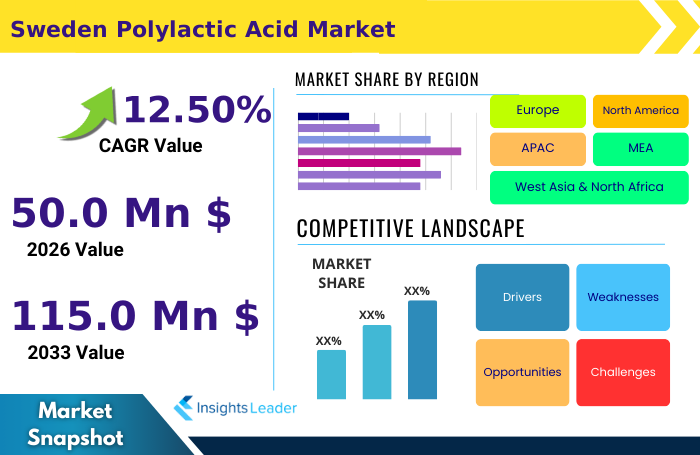
The Sweden Polylactic Acid Market Size in 2026 is estimated to be USD 50.0 Million
What is the Growth Rate (CAGR) of Sweden Polylactic Acid Market?
The Sweden Polylactic Acid Market is expected to grow at 12.5% CAGR
What is the Market Size of the Sweden Polylactic Acid in 2033?
The Sweden Polylactic Acid Market Size in 2033 is estimated to be USD 115.0 Million
What are DRO and Impact Forces of Sweden Polylactic Acid Market?
DRO stands for Drivers, Restraints, and Opportunities, which collectively analyze the internal and external forces shaping market dynamics. Key drivers include stringent EU and Swedish regulations promoting bioplastics and high consumer demand for sustainable packaging alternatives. Restraints often involve the higher production cost of PLA compared to conventional polymers and challenges related to limited industrial composting infrastructure. Opportunities emerge from advanced material blending (PLA blends) to improve barrier properties and expansion into high-value applications like 3D printing and biomedical devices.
What is Impact of U.S. Tariffs on Sweden Polylactic Acid Market?
While direct trade of finished PLA between the US and Sweden is limited, US tariffs have significant indirect impacts by disrupting global supply chains for feedstocks (such as dextrose or sugar derived from corn), leading to price volatility for producers worldwide. Furthermore, geopolitical uncertainties often encourage European manufacturers to accelerate efforts toward localized, circular supply chains to reduce reliance on distant international markets, indirectly boosting regional production capacity. This tariff-induced instability can marginally increase input costs for Swedish PLA manufacturers who source materials globally.
How is AI currently impacting Sweden Polylactic Acid Market?
Artificial Intelligence (AI) is transforming global industries by optimizing complex operations and accelerating innovation cycles. In the bioplastics sector, AI is utilized for optimizing fermentation processes to increase PLA yield and purity, improving efficiency, and reducing production costs. Globally, AI algorithms enable predictive maintenance in manufacturing facilities, enhance supply chain resilience through accurate demand forecasting, and rapidly screen and design novel biomaterial compositions with improved performance characteristics, driving forward the material science of PLA.