Japan Application Security Market Size and Insights – 2026 to 2033
Report ID : IL_6305 | Report Language's : En/Jp/Fr/De | Publisher : IL |
Format : 


What is the Market Size of the Japan Application Security in 2026?
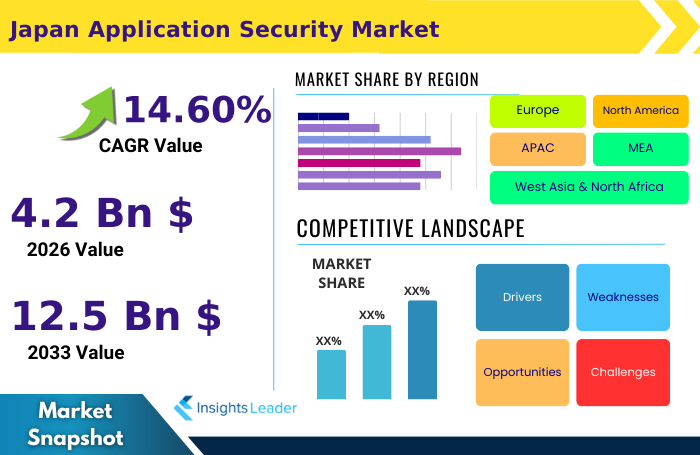
The Japan Application Security Market Size in 2026 is estimated to be USD 4.2 Billion
What is the Growth Rate (CAGR) of Japan Application Security Market?
The Japan Application Security Market is expected to grow at 14.6% CAGR
What is the Market Size of the Japan Application Security in 2033?
The Japan Application Security Market Size in 2033 is estimated to be USD 12.5 Billion
What are DRO and Impact Forces of Japan Application Security Market?
Drivers (D) include rapid digital transformation and stricter regulations (e.g., related to APPI) demanding robust data security. Restraints (R) involve the high initial cost of sophisticated solutions and a severe shortage of specialized cybersecurity talent. Opportunities (O) focus on integrating DevSecOps methodologies and utilizing AI-driven threat intelligence platforms. The primary impact force is the mandatory migration of legacy enterprise systems to secure, cloud-native architectures.
What is Impact of U.S. Tariffs on Japan Application Security Market?
While software-as-a-service application security models are minimally affected, US tariffs can potentially impact the hardware and networking components underlying application security infrastructure, leading to increased Total Cost of Ownership (TCO). Resulting global supply chain uncertainties may also cause delays in the procurement and deployment of necessary advanced security appliances, subtly slowing the pace of infrastructure modernization required for optimal security implementation in Japan.
How is AI currently impacting Japan Application Security Market?
AI is currently transforming industries globally by enabling the automation of complex threat detection processes, facilitating predictive vulnerability analysis, and enhancing real-time security incident response (SOAR platforms). This shift allows organizations to transition from reactive scanning to proactive, embedded security defenses, dramatically reducing the mean time to detect and respond (MTTR) to application-layer security threats across dynamic CI/CD pipelines worldwide.