Mexico Wearable Technology Market Size and Insights – 2026 to 2033
Report ID : IL_3093 | Report Language's : En/Jp/Fr/De | Publisher : IL |
Format : 



What is the Market Size of the Mexico Wearable Technology in 2026?
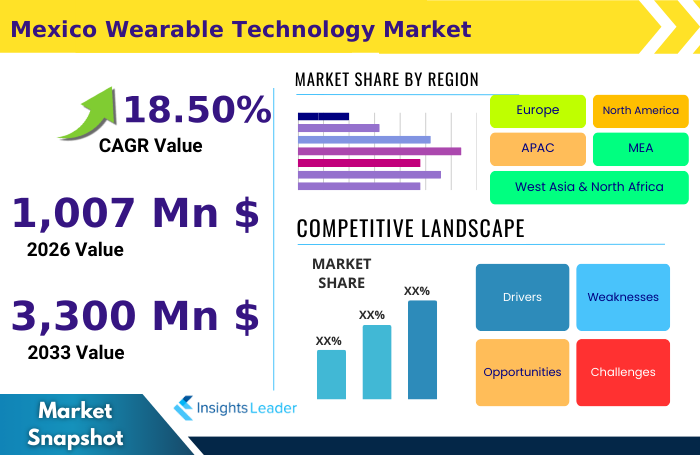
The Mexico Wearable Technology Market Size in 2026 is estimated to be $1,007 Million
What is the Growth Rate (CAGR) of Mexico Wearable Technology Market?
The Mexico Wearable Technology Market is expected to grow at 18.5% CAGR
What is the Market Size of the Mexico Wearable Technology in 2033?
The Mexico Wearable Technology Market Size in 2033 is estimated to be $3,300 Million
What are DRO & Impact Forces?
DRO stands for Drivers, Restraints, and Opportunities. Key drivers include rising disposable income, increasing health and fitness consciousness, and high smartphone penetration.Restraints involve concerns over data privacy, high initial device cost, and limited battery life in advanced sensors.Opportunities lie in integrating wearables with remote patient monitoring systems and developing specialized industrial safety applications.Impact forces are generally high, driven by rapid technological advancements and strong consumer interest in preventive health monitoring.
What is Impact of US tariffs?
US tariffs on goods imported from China have prompted a shift in global supply chains, favoring nearshoring to countries like Mexico for electronics assembly and manufacturing.This strategic shift can potentially lower logistical costs and expedite time-to-market for wearable devices targeting North American consumers.However, the core components (semiconductors, specialized sensors) remain globally sourced, meaning component cost volatility persists despite favorable assembly locations.Overall, tariffs present a long-term opportunity for Mexico to solidify its position as a regional production hub for tech goods.
How is AI currently impacting industries globally?
Artificial Intelligence is driving a profound transformation across global industries by enabling advanced personalization and predictive capabilities. In the healthcare sector, AI algorithms analyze complex biometric data collected by wearables to predict health events and customize intervention strategies, moving the focus from reactive treatment to proactive wellness management. Furthermore, AI enhances operational efficiency through automation and optimization in manufacturing and logistics, reducing production costs and accelerating innovation cycles in the technology sector. This integration fundamentally shifts value creation from hardware capabilities to data interpretation and actionable intelligence.