South Korea LNG Bunkering Market Size and Insights – 2026 to 2033
Report ID : IL_16087 | Report Language's : En/Jp/Fr/De | Publisher : IL |
Format : 


What is the Market Size of the South Korea LNG Bunkering in 2026?
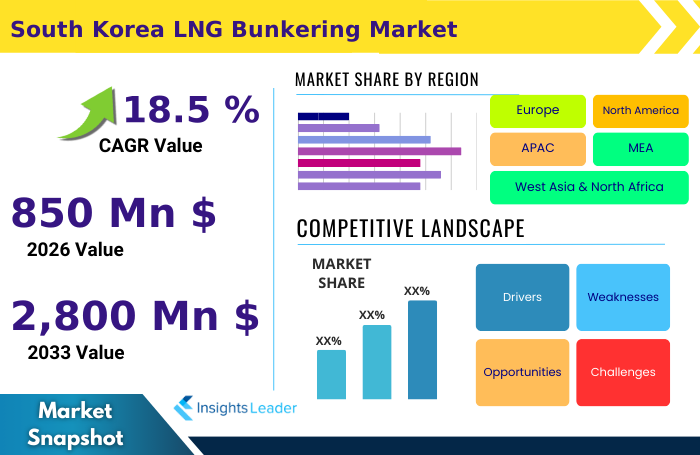
The South Korea LNG Bunkering Market Size in 2026 is estimated to be $850 Million
What is the Growth Rate (CAGR) of South Korea LNG Bunkering Market?
The South Korea LNG Bunkering Market is expected to grow at 18.5% CAGR
What is the Market Size of the South Korea LNG Bunkering in 2033?
The South Korea LNG Bunkering Market Size in 2033 is estimated to be $2,800 Million
Report Snapshot
| Report Attributes | Report Details |
|---|---|
| Forecast Year | 2033 |
| CAGR | 18.5% |
| History Year | 2016-2024 |
| Market Size in 2026 | 850 Million USD$ |
| Market Size in 2033 | 2,800 Million USD$ |
What are DRO & Impact Forces of South Korea LNG Bunkering Market?
Drivers include stringent IMO sulfur regulations (IMO 2020) and South Korea’s strategic positioning along key shipping routes, supported by government initiatives promoting environmentally friendly maritime transport. Restraints encompass high initial capital expenditure required for LNG infrastructure development and market challenges associated with LNG price volatility. Opportunities lie in expanding the fleet of LNG-powered vessels and establishing comprehensive bunkering corridors.
What is Impact of US Tariffs on South Korea LNG Bunkering Market?
U.S. tariffs indirectly affect the market by disrupting global maritime trade flow and supply chain stability, particularly concerning major East Asian trading partners. Reduced trade volumes lead to slower overall growth in vessel movements, thereby tempering the immediate increase in demand for LNG bunkering services, although regulatory compliance remains a foundational growth driver.
How is AI currently impacting South Korea LNG Bunkering Market?
AI is primarily impacting the sector by optimizing operational efficiency and enhancing safety protocols. This includes utilizing predictive analytics for scheduling the delivery of LNG, ensuring timely availability at various ports, and optimizing inventory management. AI further assists in risk assessment and monitoring terminal operations to minimize potential downtime.
South Korea LNG Bunkering Market Research Report – Table of Contents
1. Executive Summary
2. Introduction & Research Objectives
3. Scope of the Study
4. Research Methodology of South Korea LNG Bunkering Market
5. South Korea LNG Bunkering Market Overview & Industry Background
6. South Korea LNG Bunkering Market Size & Forecast Analysis
7. South Korea LNG Bunkering Market Segmentation Analysis
8. Competitive Landscape
9. Consumer Behavior & Demand Analysis
10. Pricing & Cost Structure Analysis
11. South Korea LNG Bunkering Market Drivers, Challenges & Risks
12. Regulatory & Policy Framework
13. Technology & Innovation Impact
14. Strategic Insights & Recommendations
15. Conclusion & Future Outlook
For more queries, kindly contact [email protected]