South Africa LNG Bunkering Market Size and Insights – 2026 to 2033
Report ID : IL_16127 | Report Language's : En/Jp/Fr/De | Publisher : IL |
Format : 


What is the Market Size of the South Africa LNG Bunkering in 2026?
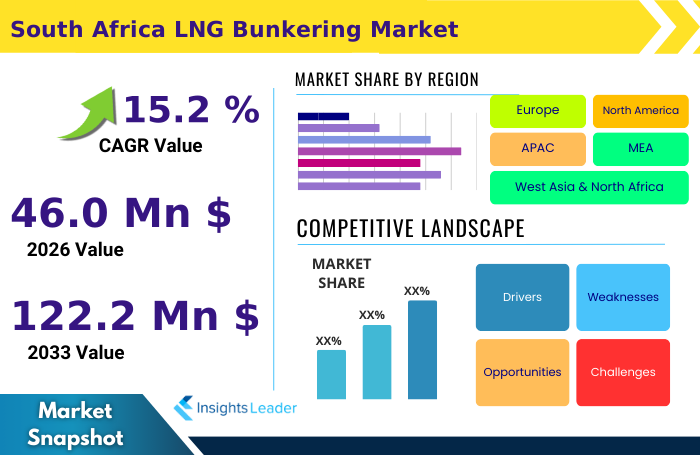
The South Africa LNG Bunkering Market Size in 2026 is estimated to be $46.0 Million USD
What is the Growth Rate (CAGR) of South Africa LNG Bunkering Market?
The South Africa LNG Bunkering Market is expected to grow at 15.20% CAGR
What is the Market Size of the South Africa LNG Bunkering in 2033?
The South Africa LNG Bunkering Market Size in 2033 is estimated to be $122.2 Million USD
Report Snapshot
| Report Attributes | Report Details |
|---|---|
| Forecast Year | 2033 |
| CAGR | 15.2% |
| History Year | 2016-2024 |
| Market Size in 2026 | 46.0 Million USD$ |
| Market Size in 2033 | 122.2 Million USD$ |
What are DRO & Impact Forces of South Africa LNG Bunkering Market?
The primary driver is the global maritime industry’s need for IMO 2020 sulfur cap compliance, rapidly accelerating the shift toward cleaner bunker fuels. Key restraints include the substantial initial capital expenditure required for developing liquefaction and storage infrastructure, coupled with regulatory hurdles associated with port safety guidelines for cryogenic fuels. Opportunities are significant due to South Africa’s strategic location along major global shipping lanes and the government’s commitment to expanding domestic gas utilization, which could catalyze infrastructure investment in key ports like Cape Town and Durban, transforming them into vital bunkering hubs.
What is Impact of US Tariffs on South Africa LNG Bunkering Market?
The direct impact of current U.S. tariffs is minimal, as the tariffs generally target manufactured goods and direct trade conflicts that do not intersect significantly with the LNG bunkering supply chain in South Africa. However, sustained global trade volatility stemming from tariff implementation can indirectly affect the market by altering international shipping patterns and reducing overall global trade volumes, which consequently moderates bunker fuel demand. The market remains far more sensitive to local regulatory support and regional gas supply economics than to transatlantic trade tariffs.
How is AI currently impacting South Africa LNG Bunkering Market?
AI is primarily optimizing the nascent LNG bunkering supply chain through advanced predictive analytics, focusing on efficient logistical operations and risk mitigation. This involves using machine learning algorithms for precise demand forecasting, optimizing the dispatch and routing of bunker vessels to minimize turnaround times in busy ports, and enhancing safety systems through real-time monitoring of facility performance. Although the market is emerging, the integration of AI is crucial for ensuring the reliable and cost-effective delivery of LNG to international shipping clients.
South Africa LNG Bunkering Market Research Report – Table of Contents
1. Executive Summary
2. Introduction & Research Objectives
3. Scope of the Study
4. Research Methodology of South Africa LNG Bunkering Market
5. South Africa LNG Bunkering Market Overview & Industry Background
6. South Africa LNG Bunkering Market Size & Forecast Analysis
7. South Africa LNG Bunkering Market Segmentation Analysis
8. Competitive Landscape
9. Consumer Behavior & Demand Analysis
10. Pricing & Cost Structure Analysis
11. South Africa LNG Bunkering Market Drivers, Challenges & Risks
12. Regulatory & Policy Framework
13. Technology & Innovation Impact
14. Strategic Insights & Recommendations
15. Conclusion & Future Outlook
For more queries, kindly contact [email protected]